









- Your cart is empty Browse Shop
📌 Quick facts:
- Poor sleep affects men’s health far beyond feeling tired — it influences energy, mood, stamina, and hormonal balance, including testosterone.
- A 2011 study in JAMA found that just one week of restricted sleep significantly lowered daytime testosterone levels in healthy young men.
- Chronic poor sleep is linked to reduced stamina, higher stress, weight gain and low motivation — a cluster many men wrongly attribute to age alone.
- Ayurveda treats sleep (nidra) as a pillar of health and links poor sleep to aggravated Vata, addressed through routine, calming practices and diet.
Sleep is often the first thing men sacrifice when life gets busy, treated as optional rather than essential. But poor sleep quietly undermines many of the things men care most about — energy, stamina, mood, focus and even hormonal health. This guide explains how sleep affects men’s health specifically, what the research shows, and how Ayurveda has long regarded sleep as fundamental rather than expendable.
Understanding just how much sleep influences reframes it from a luxury into easily one of the most powerful, and most consistently overlooked, levers for men’s overall wellbeing.
📋 In this guide
- How does poor sleep affect men’s health overall?
- Does poor sleep really lower testosterone?
- Can poor sleep reduce stamina and physical performance?
- Is low energy always about age, or could it be sleep?
- How does Ayurveda view sleep for men’s health?
- What can men do to improve sleep and protect their health?
- Frequently asked questions
How does poor sleep affect men’s health overall?
⚡ Quick answer: Poor sleep affects energy, mood, concentration, stamina, stress levels and hormonal balance. Because these systems are interconnected, insufficient sleep tends to produce a cluster of effects at once — low energy, irritability, reduced motivation and poorer physical performance — rather than a single isolated symptom.
Sleep is when the body carries out much of its repair, recovery and hormonal regulation, so shortfalls ripple across many systems at once. For men, poor sleep commonly shows up as low daytime energy, irritability or low mood, difficulty concentrating, reduced physical stamina, higher stress, and dampened motivation. Because these are all connected, insufficient sleep rarely produces just one symptom — it tends to create a cluster that can quietly erode overall wellbeing, often blamed on other things while the underlying sleep debt goes unaddressed.
Does poor sleep really lower testosterone?
⚡ Quick answer: Yes. A 2011 study in JAMA found that restricting sleep to five hours a night for just one week significantly reduced daytime testosterone in healthy young men. Testosterone is largely produced during sleep, so consistently short or poor sleep can meaningfully affect these levels.
A 2011 study published in JAMA examined the effect of sleep restriction on testosterone and found that limiting healthy young men to five hours of sleep a night for one week significantly lowered their daytime testosterone levels (Leproult & Van Cauter, 2011). This matters because much of a man’s testosterone is produced during sleep, particularly during the deeper stages. Consistently short or disrupted sleep therefore doesn’t just leave you tired — it can measurably affect the hormone tied to energy, stamina, mood and vitality, in a matter of days rather than years. That speed is worth pausing on: it means the effect isn’t some slow, distant risk but something that can begin within a single busy week of short nights — and, encouragingly, it also means the reverse is true, with better sleep able to support these levels relatively quickly once it becomes consistent again.
Can poor sleep reduce stamina and physical performance?
⚡ Quick answer: Yes. Insufficient sleep impairs recovery, reduces energy availability and affects the hormones involved in physical performance, all of which lower stamina. Many men notice their workouts, endurance and general energy suffer during periods of poor sleep, even without any change to training or diet.
Physical stamina depends heavily on recovery, and recovery happens largely during sleep. When sleep is short or poor, the body has less time to repair muscle, replenish energy stores and regulate the hormones involved in performance. The result is reduced endurance, slower recovery and lower overall energy — often noticeable even when training and diet haven’t changed. This is why sleep is increasingly recognised as a genuine performance factor, not just a comfort: for men trying to maintain stamina and strength, it’s one of the foundations everything else builds on.
Is low energy always about age, or could it be sleep?
⚡ Quick answer: Age is often blamed for declining energy and stamina, but chronic poor sleep is frequently the larger, more fixable factor. Before accepting low energy as an inevitable part of getting older, it’s worth honestly examining sleep quality, since improving it can restore more than many men expect.
Many men attribute fading energy, stamina and motivation purely to getting older, when chronic poor sleep is often doing much of the damage. Age plays a genuine role, but it’s frequently used as a catch-all explanation that lets a very fixable factor go unexamined. Someone in their 40s sleeping six broken hours a night will likely feel far older than their years — and often recover a surprising amount of energy simply by prioritising better, more consistent sleep. Age matters, but it’s rarely the whole story, and sleep is almost always the easier place to start looking first.
How does Ayurveda view sleep for men’s health?
⚡ Quick answer: Ayurveda considers nidra (sleep) one of the three pillars of health, alongside diet and balanced living. It links poor sleep to aggravated Vata dosha and depleted Ojas (vital essence), and addresses it through consistent routine, calming evening practices and a grounding diet.
Ayurveda regards nidra (sleep) as one of the three pillars of health, alongside proper diet and balanced living — reflecting a view of sleep as fundamental rather than optional. It connects poor or insufficient sleep to aggravated Vata dosha, associated with a restless, unsettled mind, and to depletion of Ojas, the vital essence underpinning strength and vitality. The traditional approach addresses this through a consistent daily routine (dinacharya), calming evening practices, and a grounding diet — reflecting the same understanding that modern research now confirms: sleep is central to men’s energy and hormonal health.
What can men do to improve sleep and protect their health?
⚡ Quick answer: Keep a consistent sleep schedule, build a calming wind-down routine, reduce screen time and caffeine late in the day, and manage stress. Because sleep affects energy, stamina and hormones so directly, improving it is one of the highest-value changes men can make, complemented by traditional vitality tonics.
The most effective steps are refreshingly straightforward: keep a consistent sleep and wake time, build a calming wind-down routine before bed, cut back on screens and caffeine in the evening, get regular daytime activity, and manage stress. Because sleep influences energy, stamina, mood and hormonal health so directly, improving it often delivers benefits across all of them at once — making it one of the highest-value changes a man can make. Traditional Ayurvedic vitality tonics are used alongside good sleep and lifestyle, complementing rather than replacing these foundations.
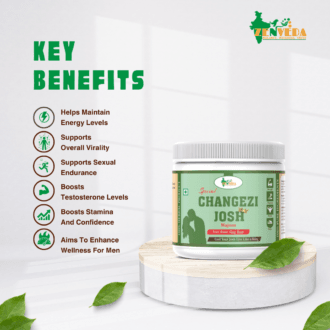
Changezi Josh Majoon by Zen Veda is a men’s vitality formulation traditionally used to support stamina, energy and everyday vigour, built on Yarsa Gumba, saffron and safed musli. Explore our wider range of Ayurvedic wellness products, or read more on our About Us page.
Want personalised guidance for your energy and vitality? Book a free consultation with our Vaidyas.
Frequently asked questions
How does poor sleep affect men specifically?
Poor sleep affects energy, mood, concentration, stamina, stress and hormonal balance, including testosterone, tending to produce a cluster of effects rather than one isolated symptom.
Does lack of sleep lower testosterone?
Yes, a 2011 JAMA study found restricting sleep to five hours a night for one week significantly lowered daytime testosterone in healthy young men, since it’s largely produced during sleep.
Can poor sleep reduce stamina?
Yes, insufficient sleep impairs recovery and the hormones involved in performance, reducing endurance and energy, often noticeable even without changes to training or diet.
Is my low energy from age or poor sleep?
Age is often blamed, but chronic poor sleep is frequently the larger and more fixable factor, so it’s worth examining sleep quality before assuming energy loss is just ageing.
How much sleep do men need?
Most adults need around seven to nine hours of quality sleep; consistently getting much less can affect energy, stamina and hormones, though individual needs vary somewhat.
How does Ayurveda view sleep for men?
Ayurveda treats nidra (sleep) as a pillar of health and links poor sleep to aggravated Vata and depleted Ojas, addressed through routine and calming practices.
📚 Sources
1. Leproult, R. & Van Cauter, E. “Effect of 1 week of sleep restriction on testosterone levels in young healthy men.” JAMA, 2011. PubMed 21632481
2. Charaka Samhita — classical description of nidra (sleep) as a pillar of health and Ojas (vital essence).
3. Ashtanga Hridayam — classical Ayurvedic reference for daily routine, sleep and Vata balance.
2. Charaka Samhita — classical description of nidra (sleep) as a pillar of health and Ojas (vital essence).
3. Ashtanga Hridayam — classical Ayurvedic reference for daily routine, sleep and Vata balance.
Disclaimer: This article is for educational purposes only and is not a substitute for personalised medical advice. Individual results vary. Please consult a qualified Ayurvedic practitioner or your healthcare provider before starting any new treatment, especially if you are managing a medical condition or taking medication.
★ 6,500+ happy customers
Ready to start your Ayurvedic hair journey?
Our Vaidyas build personalised herbal routines for you. Free consultation, no obligation.
For Free Consultation Contact +919548121325, +919149171737 | International business inquiry: sahil@zenveda.co.in / +919548121325
Recommended Zen Veda products
Author
