






- Your cart is empty Browse Shop
📌 Quick facts:
- Persistent low energy in men from the age of 30 is often driven by gradually declining testosterone, chronic stress and poor sleep — not just “getting older”.
- Vajikarana is the classical Ayurvedic branch devoted to male vitality, strength and reproductive health, described in the Charaka Samhita.
- A 2019 double-blind trial found ashwagandha raised testosterone, DHEA-S and self-reported vitality in aging men.
- Real recovery combines rasayana/vajikarana herbs with sleep, diet and stress control — not a single overnight fix.
If you have quietly noticed that the energy which came so easily in your twenties now feels harder to summon at thirty, you are far from alone. Waking up tired, flagging by mid-afternoon, losing the drive you once took for granted — for many Indian men this creeps in around the early thirties and gets brushed off as “just stress” or “just age”. Ayurveda takes a more useful view: low energy at this stage is a signal, not a life sentence, and it has a name and a whole branch of medicine devoted to it.
That branch is Vajikarana — the classical science of restoring male strength, stamina and vitality. This guide explains why male energy dips around thirty, what Vajikarana actually means (it is broader than most people assume), which herbs modern research genuinely supports, and how to rebuild your energy sustainably rather than chasing quick fixes.
📋 In this guide
- Why do men feel low energy and fatigue by 30?
- What is Vajikarana therapy in Ayurveda?
- Which Ayurvedic herbs support men’s energy and vitality?
- Does science support Ayurvedic vitality herbs like ashwagandha?
- What lifestyle changes restore male energy naturally?
- How does Zen Veda support men’s vitality?
- Frequently asked questions
Why do men feel low energy and fatigue by 30?
⚡ Quick answer: From around thirty, most men see a slow yearly decline in testosterone alongside mounting work stress, disturbed sleep and less physical activity. Together these lower drive, stamina and mood. It is usually a gradual, lifestyle-driven dip rather than sudden illness — which is exactly why it responds so well to daily habits and rejuvenative herbs.
Several things quietly overlap in a man’s early thirties. Testosterone, the hormone most tied to male energy, drive and muscle, begins a slow decline of roughly one percent a year from about age thirty. On its own that is gentle — but it rarely acts alone. Layer on long working hours, financial pressure, irregular sleep, screen-heavy evenings, processed food and falling physical activity, and the body’s stress system stays switched on. Chronically elevated cortisol (the stress hormone) further blunts testosterone and drains reserves. In Ayurvedic terms, this is a depletion of ojas — the subtle essence of vitality and immunity — and often an aggravation of vata from an overstretched, irregular lifestyle. The reassuring part is that this pattern is largely reversible.
What is Vajikarana therapy in Ayurveda?
⚡ Quick answer: Vajikarana is one of the eight classical branches of Ayurveda, devoted to male vitality, strength and healthy reproduction. The word comes from vaji (horse), symbolising vigour and stamina. It uses nourishing herbs, diet and lifestyle to rebuild ojas and shukra dhatu (reproductive tissue), improving energy and confidence — not just sexual function.
Vajikarana (literally “making one strong as a horse”) is a formal branch of classical Ayurveda, detailed in the Charaka Samhita’s Chikitsasthana. It is easy to reduce it to “sexual tonics”, but the classical intent is broader: to nourish and strengthen the whole system, restore ojas and shukra dhatu (the reproductive tissue considered the culmination of healthy nutrition), and thereby renew energy, stamina, confidence and reproductive health together. It sits alongside rasayana (rejuvenation) as one of Ayurveda’s two “promotive” therapies — medicine aimed not at treating disease but at building robust vitality. That whole-body philosophy is why Vajikarana herbs are traditionally taken as balanced formulas with milk, ghee and honey rather than as isolated stimulants.
Which Ayurvedic herbs support men’s energy and vitality?
⚡ Quick answer: The best-known Vajikarana and rasayana herbs include ashwagandha, safed musli, shilajit, kaunch beej and gokshura. Ashwagandha is prized for stress and stamina, safed musli and kaunch beej for strength and drive, and shilajit as a mineral-rich rejuvenator. Traditionally they are combined into balanced tonics rather than used alone.
| Herb | Traditional role in men’s vitality |
|---|---|
| Ashwagandha | Adaptogen for stress, sleep, stamina and strength |
| Safed Musli | Nourishing tonic for energy and drive |
| Shilajit | Mineral-rich rejuvenator for endurance |
| Kaunch Beej | Traditional support for strength and nervous vitality |
| Gokshura | Used for stamina and healthy reproductive function |
Classical Vajikarana and rasayana texts lean on a familiar group of herbs, each with a slightly different emphasis. Ashwagandha (Withania somnifera) is the standout adaptogen — traditionally used to calm an overworked nervous system while rebuilding strength and stamina. Safed musli and kaunch beej are valued as nourishing tonics for energy and drive; shilajit, a mineral-rich exudate from Himalayan rocks, is used as a deep rejuvenator; and gokshura supports stamina and healthy reproductive function. In practice these are almost never used in isolation. The Ayurvedic instinct is to blend them — often with saffron, honey and milk — so they work synergistically and gently, which also suits daily, long-term use.
Does science support Ayurvedic vitality herbs like ashwagandha?
⚡ Quick answer: Yes, for ashwagandha the human evidence is encouraging. A 2019 double-blind, placebo-controlled trial in aging, overweight men found that ashwagandha extract raised testosterone and DHEA-S and improved self-reported vitality and fatigue versus placebo. It is not a miracle hormone, but it is a genuinely researched adaptogen with measurable effects on male vitality.
Ashwagandha is where traditional use and modern research meet most convincingly. In a randomised, double-blind, placebo-controlled crossover trial published in the American Journal of Men’s Health (2019;13(2)), Lopresti and colleagues gave aging, overweight men a standardised ashwagandha extract for eight weeks. Compared with placebo, the ashwagandha group showed a meaningful rise in testosterone and DHEA-S along with improvements in self-reported vitality and fatigue. It is important to read this honestly: this is one moderate-sized trial, the effect is supportive rather than dramatic, and ashwagandha is not a replacement for medical hormone therapy where that is genuinely needed. But it does mean the traditional reputation of these herbs is not empty folklore — there is real, peer-reviewed signal behind it. You can read the study on PubMed (ID 30854916).
What lifestyle changes restore male energy naturally?
⚡ Quick answer: Herbs work best on a solid foundation: seven to eight hours of sleep, regular strength exercise, a whole-food diet with enough protein and healthy fats, and daily stress control such as pranayama or a short walk. Cutting late-night screens, alcohol and processed sugar often lifts energy within weeks — before any supplement is added.
No tonic can outwork a depleting lifestyle, so the classical approach always pairs herbs with dinacharya — a steady daily routine. The highest-yield habits are unglamorous but powerful: protect seven to eight hours of genuine sleep, since most testosterone is produced during deep sleep; move your body with regular resistance exercise, which directly supports hormonal health; eat real, warm, nourishing food with adequate protein and healthy fats rather than skipped meals and late-night snacks; and defuse chronic stress daily through pranayama, meditation or even a brisk evening walk. Reducing alcohol, late-night screens and refined sugar removes some of the biggest hidden energy drains. Get these right and many men feel noticeably brighter within a few weeks — with vitality herbs then amplifying, rather than substituting for, that foundation.
How does Zen Veda support men’s vitality?
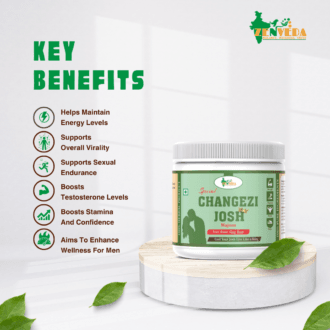
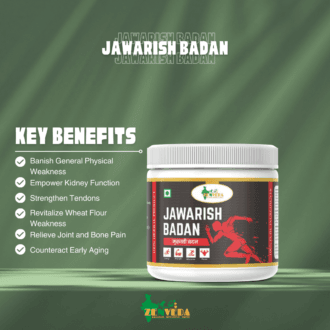
⚡ Quick answer: Zen Veda offers Vajikarana-inspired formulas such as Changezi Josh, a men’s vitality majoon built on traditional tonic herbs, and Jawarish Badan for overall male health support. Both are made from certified, Uttarakhand-sourced herbs and are designed to be taken daily alongside good sleep, diet and exercise for steady, natural energy.
Zen Veda’s men’s range is built around this whole-formula, whole-lifestyle philosophy rather than quick stimulants. Changezi Josh is a traditional men’s vitality majoon that blends classical tonic herbs into a balanced formula taken with warm milk, while Jawarish Badan is formulated for broader male health and stamina support. Every product is crafted from certified, Uttarakhand-sourced herbs, and is meant to be used consistently as part of a healthy routine. Browse the full Zen Veda range to find the right fit for your needs.
Not sure where to start? You can book a free consultation with our Vaidyas for honest, personalised guidance — no pressure, no hype.
Frequently asked questions
At what age does male energy start declining?
Testosterone begins a slow decline of about one percent a year from around age thirty. On its own this is gentle, but combined with stress, poor sleep and inactivity it can make many men feel a clear dip in energy and drive by their early to mid thirties.
Is Vajikarana only about sexual health?
No. Although Vajikarana includes reproductive health, its classical aim is much broader — to strengthen the whole body, rebuild ojas and vitality, and improve energy, stamina and confidence. Think of it as comprehensive male rejuvenation rather than a narrow sexual remedy.
How long do Ayurvedic vitality herbs take to work?
Rasayana and Vajikarana herbs work gradually. Most men notice improvements in energy, sleep and stamina over four to eight weeks of consistent daily use, alongside good lifestyle habits. They are designed for steady, cumulative benefit rather than instant effect.
Can men in their 20s use vitality tonics?
Yes, healthy younger men can use gentle rasayana herbs like ashwagandha for stress, sleep and stamina. As always, choose trusted formulas, follow the dosage, and consult a practitioner if you have any medical condition or take medication.
Are Ayurvedic men’s tonics safe?
Well-formulated Ayurvedic tonics from certified herbs are generally safe for healthy adults in recommended doses. Choose transparent, quality-tested brands, avoid suspiciously cheap products, and speak to a qualified practitioner if you are managing a health condition or on medication.
📚 Sources
1. Lopresti AL, Drummond PD, Smith SJ. “A Randomized, Double-Blind, Placebo-Controlled, Crossover Study Examining the Hormonal and Vitality Effects of Ashwagandha (Withania somnifera) in Aging, Overweight Males.” American Journal of Men’s Health, 2019;13(2). PubMed 30854916
2. Charaka Samhita, Chikitsasthana — the classical source of Vajikarana therapy for male vitality and strength.
3. Ashtanga Hridayam — classical Ayurvedic reference for rasayana (rejuvenation) and daily-routine principles.
2. Charaka Samhita, Chikitsasthana — the classical source of Vajikarana therapy for male vitality and strength.
3. Ashtanga Hridayam — classical Ayurvedic reference for rasayana (rejuvenation) and daily-routine principles.
★ 6,500+ happy customers
Ready to start your Ayurvedic hair journey?
Our Vaidyas build personalised herbal routines for you. Free consultation, no obligation.
For Free Consultation Contact +919548121325, +919149171737 | International business inquiry: sahil@zenveda.co.in / +919548121325
Recommended Zen Veda products
Author
