







- Your cart is empty Browse Shop
📌 Quick facts:
- Women are well documented to delay seeking care for the same symptoms men tend to act on more quickly, across multiple studied health conditions and settings.
- A study on heart attack symptoms confirms women often wait considerably longer before seeking treatment, partly attributing symptoms to stress or general fatigue instead.
- Ignoring persistent symptoms genuinely doesn’t make underlying conditions disappear — it typically just delays diagnosis to a later, considerably less manageable stage of illness.
- Ayurveda treats consistent self-observation as a genuinely foundational daily practice, not an optional afterthought reserved only for emergencies or crises.
Putting one’s own health consistently last is a pattern many women recognise almost instantly, often without fully realising how consistently and quietly it plays out across ordinary daily life, week after week. This guide looks at why this pattern is so common, what research shows about its real consequences, and how Ayurveda frames ongoing self-care as foundational rather than indulgent.
Understanding clearly why this pattern is so widespread genuinely matters because naming it plainly is often the first step toward genuinely changing it, rather than continuing to treat one’s own health as the thing that can always wait until later. Many women only recognise the pattern clearly in hindsight, looking back at how many small warning signs quietly went unmentioned over the years, one after another.
📋 In this guide
- Is delaying care for symptoms actually a documented pattern?
- Why do women commonly deprioritise their own symptoms?
- What actually happens when symptoms are consistently ignored?
- Does self-care actually require large amounts of time?
- How can this pattern realistically be shifted?
- How does Ayurveda frame ongoing self-observation?
- Frequently asked questions
Is delaying care for symptoms actually a documented pattern?
⚡ Quick answer: Yes. Research on heart attack symptoms confirms women often wait longer than men before seeking treatment, frequently attributing symptoms to stress, fatigue or anxiety instead of a genuine physical cause. This delay pattern has been documented across multiple health conditions, not just one.
A study examining gender differences in delayed treatment-seeking for acute heart attack symptoms found that women were considerably more likely to attribute their symptoms to stress, anxiety or general everyday fatigue rather than recognising them clearly as a genuine medical emergency, ultimately resulting in longer, sometimes dangerous delays before seeking proper care (Lefler & Bondy, 2005). This particular delay pattern isn’t confined only to cardiac symptoms alone — similar delay patterns have been documented across a genuinely wide range of health conditions, suggesting something broader and more systemic is happening beyond any single diagnosis or symptom type in isolation.
Why do women commonly deprioritise their own symptoms?
⚡ Quick answer: Caregiving responsibilities, workplace demands and a broader cultural pattern of putting others first all contribute to women deprioritising their own health. Symptoms are often mentally filed under “deal with it later” simply because there’s rarely an obvious pause in the day to address them properly.
Several overlapping factors genuinely contribute to this pattern. Caregiving responsibilities for children, ageing parents or an entire household often place a woman’s own needs firmly last on an already long, ever-growing daily list. Workplace demands add another layer of competing priority. There’s also a broader cultural conditioning at play here — many women are socialised from a young age to attend to others’ needs before their own, making it feel almost automatic and unremarkable to mentally file a persistent symptom under “deal with it later” rather than treating it as genuinely worth immediate attention right now, today, before the list of competing priorities grows even longer still. Breaking this pattern often takes deliberate, conscious effort, since it rarely announces itself as a choice being made in the moment.
What actually happens when symptoms are consistently ignored?
⚡ Quick answer: Ignoring symptoms doesn’t make underlying conditions disappear — most continue quietly progressing regardless of whether they’re being addressed. This typically means diagnosis eventually happens at a later, more advanced and often more complicated stage than if the same symptom had been raised earlier.
A persistent symptom that’s consistently ignored doesn’t resolve itself simply because it’s been mentally deprioritised — the underlying condition, whatever it is, generally continues progressing in the background regardless of whether it’s being actively addressed. This means that by the time attention is finally paid, often during a genuine crisis or once symptoms become truly impossible to ignore any longer, the situation has frequently progressed to a considerably more advanced and more complicated stage than it would have been had it been raised months or years earlier, when it was still manageable.
Does self-care actually require large amounts of time?
⚡ Quick answer: No — meaningful self-care doesn’t require hours; it starts with something as simple as noticing and naming a symptom rather than automatically dismissing it. A five-minute conversation with a doctor about something that’s been “fine, probably nothing” is often all it genuinely takes to begin.
One of the more persistent, unhelpful myths around self-care is that it demands large, dedicated blocks of time most women simply don’t have room for in an already full schedule. In reality, the first and most important step is far smaller: noticing a symptom and naming it honestly, rather than automatically minimising it as “probably nothing” or “just stress.” A short, brief conversation with a doctor about something that’s been quietly bothering someone for weeks now is often all it genuinely takes to begin — the actual barrier is rarely time itself, but the deeply ingrained habit of simply not raising it in the first place, year after year.
How can this pattern realistically be shifted?
⚡ Quick answer: Treating a symptom check-in like any other non-negotiable appointment, saying it out loud to someone else, and scheduling routine check-ups in advance rather than waiting for a crisis are all practical ways to shift this pattern. Small, consistent habits tend to work better than occasional dramatic gestures.
Practical, small-scale shifts tend to work considerably better than sweeping, dramatic resolutions made once and then quietly forgotten within weeks. Treating a routine symptom check-in as a genuinely non-negotiable appointment, the same way a child’s school meeting or a work deadline would be treated, helps it actually happen. Saying a genuine concern out loud to a partner, close friend or family member creates a small amount of accountability that’s often surprisingly, quietly effective. Scheduling routine check-ups well in advance, rather than passively waiting for a genuine crisis to force the whole issue, removes the decision entirely from an already overloaded, exhausting moment when willpower is at its lowest.
How does Ayurveda frame ongoing self-observation?
⚡ Quick answer: Ayurveda treats consistent self-observation and daily self-care as a foundational practice, not an occasional, emergency-only response. Noticing changes in digestion, energy, sleep and mood as they happen is considered part of ordinary daily life, not a separate task requiring extra time.
Classical Ayurveda genuinely treats daily self-observation as a foundational practice woven directly into ordinary life, rather than an occasional response reserved solely for emergencies or crises that finally force the issue. Paying attention to shifts in digestion, energy, sleep quality and mood is considered part of routine self-awareness, not a separate, additional task competing for scarce time. This framing is genuinely useful here: it repositions attention to one’s own body as an ordinary daily habit, no different from brushing one’s teeth, rather than an indulgence squeezed in only once everything else has already been handled first.
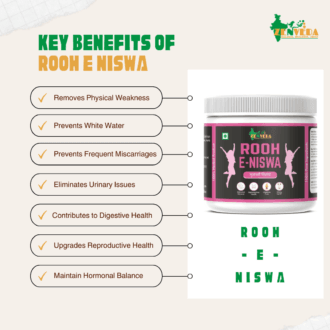
Rooh E Niswa by Zen Veda is an Ayurvedic formulation designed to support women’s health and hormonal balance as part of a consistent daily routine. Explore our wider range of Ayurvedic wellness products, or read more on our About Us page.
Want personalised guidance for your wellness routine? Reach out to our team.
Frequently asked questions
Do women really delay seeking care more than men?
Research on conditions like heart attacks confirms women often wait considerably longer before seeking help, frequently attributing symptoms to stress or anxiety rather than a genuine underlying physical cause.
Why do women often deprioritise their own symptoms?
Caregiving demands, workplace pressure and broader cultural conditioning toward consistently putting others first all genuinely contribute to this common, well-documented and widely shared pattern.
What happens if symptoms are consistently ignored?
Underlying conditions typically continue progressing quietly regardless of whether they’re addressed, often leading to eventual diagnosis at a later, considerably more advanced and complicated stage.
Does self-care require a lot of extra time?
No, it often genuinely starts with simply noticing and honestly naming a symptom out loud, rather than automatically dismissing it as unimportant or probably nothing.
How does Ayurveda approach ongoing self-care?
As a genuinely foundational daily practice woven directly into ordinary life, not an occasional response reserved only for emergencies, crises or a sudden scare.
📚 Sources
1. Lefler, L. L. & Bondy, K. N. “Gender differences in reasons patients delay in seeking treatment for acute myocardial infarction symptoms.” Patient Education and Counseling, 2005. PubMed 15590222
2. Charaka Samhita — classical description of daily self-observation and routine as foundational to health.
3. Ashtanga Hridayam — classical Ayurvedic reference on daily and seasonal self-care practices.
2. Charaka Samhita — classical description of daily self-observation and routine as foundational to health.
3. Ashtanga Hridayam — classical Ayurvedic reference on daily and seasonal self-care practices.
Disclaimer: This article is for educational purposes only and is not a substitute for professional medical advice. Individual circumstances vary. If you have persistent or concerning symptoms, please consult a qualified healthcare professional promptly.
★ 6,500+ happy customers
Ready to start your Ayurvedic hair journey?
Our Vaidyas build personalised herbal routines for you. Free consultation, no obligation.
For Free Consultation Contact +919548121325, +919149171737 | International business inquiry: sahil@zenveda.co.in / +919548121325
Recommended Zen Veda products
Author
