


- Your cart is empty Browse Shop
📌 Quick facts:
- Dandruff is a chronic, recurring condition — it doesn’t have a permanent one-time cure, which is why it keeps coming back for so many people.
- The main driver is Malassezia yeast, a naturally occurring scalp organism that overgrows under certain conditions, triggering flaking and irritation.
- A clinical review confirms dandruff is closely related to seborrheic dermatitis and requires ongoing management rather than a single treatment.
- Ayurveda links recurring dandruff to aggravated kapha and vata doshas on the scalp — addressed through diet, oil therapy and consistent scalp care.
Dandruff has a frustrating habit of disappearing for a few weeks after a new shampoo or treatment, only to return right on schedule. If this cycle feels familiar, you’re not doing anything wrong — dandruff is, by its very nature, a chronic condition that needs ongoing management rather than a single fix. This guide explains why dandruff keeps recurring, what research says about managing it long-term, and how Ayurveda approaches scalp health as a continuous practice rather than a one-time treatment.
Understanding dandruff as a manageable, recurring condition — rather than something you should be able to permanently cure — changes the entire approach, from frustration and product-hopping to a sustainable, realistic routine. This shift in mindset alone often reduces the anxiety and constant experimentation that tends to make the whole experience feel far more frustrating than it needs to be.
📋 In this guide
- Why does dandruff keep coming back after treatment?
- What does research say about dandruff and seborrheic dermatitis?
- What everyday factors make dandruff worse?
- How does Ayurveda understand recurring dandruff?
- What’s a realistic, sustainable routine for managing dandruff?
- How does Zen Veda support long-term scalp health?
- Frequently asked questions
Why does dandruff keep coming back after treatment?
⚡ Quick answer: Dandruff is fundamentally a chronic, recurring condition driven by a naturally occurring scalp yeast called Malassezia, which never fully disappears — it can only be kept in check. Treatments reduce flaking and irritation while they’re used, but stopping usually allows the underlying yeast overgrowth and scalp irritation to return within weeks.
Malassezia yeast lives on every scalp, dandruff or not — it becomes a problem only when it overgrows and triggers irritation and excess skin cell turnover, leading to visible flaking. Because this yeast is a normal part of scalp flora, treatments work by controlling its levels rather than eliminating it permanently. This is precisely why dandruff often returns once a treatment shampoo or oil is stopped: the underlying conditions that allowed the yeast to overgrow — oil production, scalp pH, immune response — haven’t necessarily changed, only been temporarily suppressed.
What does research say about dandruff and seborrheic dermatitis?
⚡ Quick answer: A clinical review confirms dandruff exists on the same spectrum as seborrheic dermatitis, both driven by Malassezia yeast and involving similar underlying mechanisms. Because these are chronic inflammatory skin conditions rather than infections that resolve, the review emphasises that ongoing, consistent management is the realistic long-term approach rather than expecting a permanent cure.
A review published in the Journal of Clinical and Investigative Dermatology (2015) examined dandruff and seborrheic dermatitis together, describing them as closely related conditions on the same spectrum, both linked to Malassezia yeast and individual variations in skin barrier function and immune response. The review’s key practical takeaway is that these are chronic conditions requiring continuous, consistent management, similar to how conditions like eczema are managed — not something eliminated once and never addressed again. You can read the review on PubMed (ID 27148560).
What everyday factors make dandruff worse?
⚡ Quick answer: Stress, cold and dry weather, infrequent hair washing, harsh or irritating hair products, and a diet high in sugar and processed food can all worsen dandruff. Because Malassezia thrives on oil, both too little scalp cleansing and certain oily product buildups can each make flaking worse in different people.
Several everyday factors can tip the balance toward worse dandruff. Stress affects immune function and oil production, both of which influence yeast levels on the scalp. Cold, dry weather often worsens flaking for many people, while others find it worse in humid conditions — scalp response varies quite a bit individually. Infrequent washing allows oil and yeast byproducts to build up, while harsh, stripping shampoos can irritate the scalp and worsen inflammation in a different way. Diet high in sugar and processed food is also thought to influence oil production and inflammation, adding another everyday lever worth adjusting.
How does Ayurveda understand recurring dandruff?
⚡ Quick answer: Ayurveda links dandruff to aggravated kapha dosha (causing oiliness and buildup) combined with disturbed vata (causing dryness and flaking) on the scalp, often worsened by poor diet and stress. Support focuses on balancing both doshas through diet, regular oil therapy, and herbs traditionally used to calm scalp irritation.
Ayurveda describes dandruff, or darunaka, as arising from a combination of aggravated kapha dosha, contributing to excess oiliness and scalp buildup, and disturbed vata dosha, contributing to dryness and flaking — a combination that echoes the individual variability seen in modern dandruff, where some scalps run oily and others dry. Traditional support emphasises regular oil massage with herbs traditionally used to calm scalp irritation and balance both doshas, alongside dietary moderation of heavy, oily and sugary foods believed to aggravate kapha further. This is framed as an ongoing practice, not a one-time treatment, aligning closely with the modern understanding of dandruff as a chronic condition.
What’s a realistic, sustainable routine for managing dandruff?
⚡ Quick answer: Wash regularly with a gentle, appropriate shampoo, use scalp oil treatments consistently rather than occasionally, manage stress, and moderate sugar and processed food. Think of this as ongoing scalp maintenance rather than a cure — small consistent habits, kept up indefinitely, control dandruff far better than an intense treatment used only when flaking flares up.
| Do consistently | Avoid |
|---|---|
| Regular gentle washing | Very infrequent or very frequent harsh washing |
| Consistent scalp oil routine | Stopping treatment as soon as flaking clears |
| Balanced diet, less sugar | High sugar and processed food |
| Stress management | Chronic unmanaged stress |
Because dandruff is chronic, the most realistic approach is building a sustainable maintenance routine rather than searching for a permanent cure. Wash regularly with a shampoo suited to your scalp, and use scalp oil treatments as an ongoing part of your routine rather than stopping the moment flaking improves — this is the single most common mistake that leads to relapse. Manage stress where possible, and moderate sugar and processed food, since both influence scalp oil production and inflammation. None of this needs to be elaborate, but it does need to be consistent and ongoing, much like managing any other chronic condition. Treating scalp care the same way you’d treat a long-term skin condition, rather than a problem to solve once, sets more realistic expectations from the start.
How does Zen Veda support long-term scalp health?
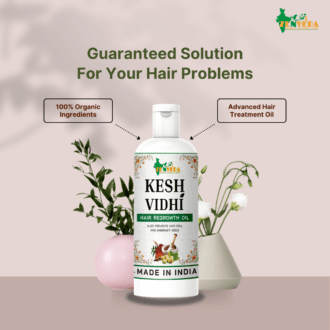
⚡ Quick answer: Zen Veda’s Kesh Vidhi Regrowth Hair Oil is a herbal oil traditionally used to support scalp health and calm irritation, made from certified, Uttarakhand-sourced herbs. It’s designed for regular, ongoing use as part of ongoing scalp maintenance — not as a one-time treatment, which aligns with how dandruff actually needs to be managed.
Kesh Vidhi Regrowth Hair Oil is formulated from certified, Uttarakhand-sourced herbs traditionally used to support scalp health and calm irritation. We recommend using it as part of a consistent, ongoing routine rather than only during a flare-up, since dandruff responds best to sustained, regular care. Explore the wider Zen Veda range, or learn more on our About Us page.
Tired of the dandruff cycle? You can book a free consultation with our Vaidyas for a sustainable scalp care routine suited to you.
Frequently asked questions
Why does dandruff keep coming back?
Dandruff is a chronic condition driven by naturally occurring scalp yeast, which can be controlled but not permanently eliminated, so it tends to return once treatment stops.
Is dandruff the same as seborrheic dermatitis?
They exist on the same spectrum. Dandruff is generally milder, while seborrheic dermatitis involves more inflammation, but both share the same underlying yeast-related mechanism.
Can diet affect dandruff?
Yes, a diet high in sugar and processed food is thought to influence scalp oil production and inflammation, both of which can worsen dandruff over time.
Should you stop using scalp oil once dandruff clears?
No, stopping too early is a common reason dandruff returns quickly. Ongoing, consistent use as part of a routine works better than stopping as soon as symptoms improve.
When should dandruff be checked by a dermatologist?
See a dermatologist if dandruff is severe, doesn’t respond to regular treatment, or comes with significant redness, pain, or hair loss, which may indicate another condition.
📚 Sources
1. “Seborrheic dermatitis and dandruff: a comprehensive review.” Journal of Clinical and Investigative Dermatology, 2015. PubMed 27148560
2. Charaka Samhita — classical description of darunaka, kapha and vata dosha imbalance affecting the scalp.
3. Ashtanga Hridayam — classical Ayurvedic reference for scalp oil therapy and hair care routine.
2. Charaka Samhita — classical description of darunaka, kapha and vata dosha imbalance affecting the scalp.
3. Ashtanga Hridayam — classical Ayurvedic reference for scalp oil therapy and hair care routine.
Disclaimer: This article is for educational purposes only and is not a substitute for personalised medical advice. Individual results vary. Please consult a qualified Ayurvedic practitioner or your healthcare provider before starting any new treatment, especially if you are managing a medical condition or taking medication.
★ 6,500+ happy customers
Ready to start your Ayurvedic hair journey?
Our Vaidyas build personalised herbal routines for you. Free consultation, no obligation.
For Free Consultation Contact +919548121325, +919149171737 | International business inquiry: sahil@zenveda.co.in / +919548121325
Recommended Zen Veda products
Author
