







- Your cart is empty Browse Shop
📌 Quick facts:
- Premature greying — grey hair before about 25 in Indians — is driven by a mix of genetics, nutrient deficiencies, stress and lifestyle, not a single cause.
- A 2020 systematic review linked early greying to factors including low vitamin B12, vitamin D, iron and ferritin, along with family history and oxidative stress.
- Genetics set the baseline, but nutrition and stress often decide how early greying actually shows up for a given person.
- Ayurveda traditionally connects premature greying (akala palitya) to aggravated Pitta dosha affecting the hair roots.
Spotting your first grey hairs in your teens or twenties can be unsettling, and it raises an obvious question: why is this happening so early? Premature greying is more common than many people realise, and the reasons behind it are more varied than “it’s just genetics.” This guide breaks down what actually causes early greying, what the research shows, and how Ayurveda has long understood it.
Understanding the real drivers matters, because while some causes (like genetics) can’t be changed, several others — nutrition, stress, and lifestyle — genuinely can be influenced, which is where any meaningful approach has to focus.
📋 In this guide
What actually causes hair to turn grey early?
⚡ Quick answer: Hair greys when pigment-producing cells (melanocytes) in the follicle gradually stop making melanin. When this happens early, it’s usually a combination of genetics, nutrient deficiencies, oxidative stress and lifestyle factors working together, rather than any single isolated cause you can point to.
Hair colour comes from melanin, produced by cells called melanocytes at the base of each hair follicle. Greying happens when these cells slow down or stop producing pigment. When this occurs prematurely — generally before around 25 in Indian populations — it’s rarely down to one thing. Instead, genetics set a predisposition, and factors like nutrient deficiencies, oxidative stress and lifestyle then influence how early and how quickly the greying actually appears.
Does genetics decide when you go grey?
⚡ Quick answer: Genetics is the single strongest factor — if your parents greyed early, you’re more likely to as well. But genetics sets a predisposition rather than an unchangeable fate, and nutrition, stress and lifestyle often determine how early that genetic tendency actually shows up.
Family history is consistently the strongest predictor of premature greying. If one or both parents greyed young, the likelihood rises significantly. That said, genetics establishes a tendency, not a fixed timeline — two people with similar genetic predisposition can grey at noticeably different ages depending on their nutrition, stress levels and overall health. So while you can’t change your genes, they don’t act entirely alone, which is exactly why the other factors are worth paying attention to. Think of genetics as loading the dice rather than deciding the outcome outright — it raises your likelihood, but the everyday factors you can actually influence still shape when and how quickly early greying unfolds. This is why two siblings with the same family history sometimes grey years apart.
Can nutrient deficiencies cause premature greying?
⚡ Quick answer: Yes. Research has linked early greying to deficiencies in vitamin B12, vitamin D, iron and ferritin, along with low copper and zinc in some studies. These nutrients support healthy pigment production, so shortfalls can contribute to hair losing colour earlier than it otherwise would.
A 2020 systematic review published in Dermatologic Therapy examined risk factors for premature greying and found associations with several nutrient deficiencies, including low vitamin B12, vitamin D, iron and ferritin (Kumar et al., 2020). These nutrients play roles in the health of the follicle and its pigment-producing cells, which is why correcting a genuine deficiency — confirmed by testing — is one of the few directly addressable factors in early greying. It’s not a guaranteed reversal, but nutritional status is a real, modifiable piece of the picture. The practical takeaway is worth stressing: rather than guessing or self-supplementing blindly, it’s far more useful to get these specific levels checked, since correcting a deficiency you actually have is meaningful, while flooding the body with nutrients it isn’t short of achieves little.
Does stress really turn hair grey faster?
⚡ Quick answer: Chronic stress is increasingly recognised as a contributor to premature greying through oxidative stress that can damage pigment-producing cells. The old idea that stress “turns hair grey overnight” is a myth, but sustained stress over time does appear to play a genuine role.
The dramatic notion of hair going grey overnight from a shock isn’t accurate — hair that’s already grown can’t change colour. But chronic, ongoing stress is a different matter. Sustained stress increases oxidative stress in the body, which can damage the melanocytes responsible for hair pigment over time. This is why long-term stress is now considered a legitimate contributing factor to early greying, distinct from the exaggerated overnight-greying myth, and another reason stress management matters for overall health. The reassuring flip side is that stress is one of the more actionable factors on this list — regular sleep, physical activity, and simple daily wind-down routines all reduce the sustained load that contributes to oxidative damage, benefiting far more than just your hair in the process.
How does Ayurveda explain premature greying?
⚡ Quick answer: Ayurveda calls premature greying akala palitya and traditionally links it to aggravated Pitta dosha — the principle of heat and metabolism — affecting the hair roots. This framework connects greying to diet, stress and internal heat, aligning with modern findings on stress and metabolism.
Classical Ayurveda describes premature greying as akala palitya and attributes it primarily to aggravated Pitta dosha, which governs heat and transformation in the body. Excess Pitta, driven by factors like a heating diet, stress and lifestyle, is traditionally seen as affecting the hair roots and their natural colour. Interestingly, this centuries-old emphasis on internal heat, stress and metabolism overlaps meaningfully with modern research linking greying to oxidative stress and lifestyle — two very different systems arriving at related conclusions from entirely separate starting points.
Can premature greying be slowed or managed?
⚡ Quick answer: You can address the modifiable factors — correct confirmed nutrient deficiencies, manage stress, eat a balanced diet and support scalp health. Established greying usually can’t be fully reversed, but tackling these factors may help slow further progression, alongside traditional herbal scalp support.
Realistic expectations matter here: hair that has already lost its pigment generally can’t be restored to its original colour. What you can do is address the factors within your control — correcting a genuine, tested nutrient deficiency, managing chronic stress, eating a balanced diet, and supporting scalp and follicle health. These steps target the modifiable contributors rather than the fixed genetic ones. Traditional Ayurvedic scalp oils are used alongside these measures to nourish the scalp, working as a complement to, not a substitute for, addressing the underlying factors. Setting honest expectations from the start tends to make the whole approach feel far more worthwhile and sustainable over the long run.
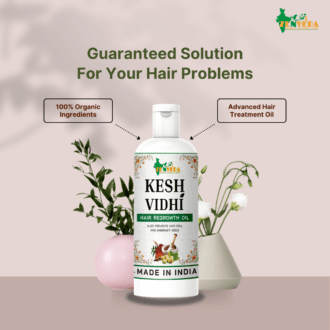
Kesh Vidhi by Zen Veda is a Bhringraj-based Ayurvedic hair oil made to nourish the scalp and support healthier hair as part of a regular massage routine. Explore our wider range of Ayurvedic wellness products, or read more on our About Us page.
Want personalised guidance for your hair concerns? Reach out to our team.
Frequently asked questions
At what age is greying considered premature?
In Indian populations, greying before roughly age 25 is generally considered premature, though the exact cutoff varies somewhat by ethnicity and study.
Is premature greying mostly genetic?
Genetics is the strongest single factor, but it sets a predisposition rather than a fixed timeline — nutrition, stress and lifestyle influence how early it actually appears.
Can vitamin deficiencies cause grey hair?
Yes, research links early greying to deficiencies in vitamin B12, vitamin D, iron and ferritin, so correcting a confirmed deficiency is one of the few directly addressable factors.
Does stress cause grey hair?
Chronic stress can contribute through oxidative stress that damages pigment cells over time, though the idea of hair greying overnight from a shock is a myth.
Can premature grey hair be reversed?
Hair that has already lost pigment usually can’t be fully reversed, but addressing nutrient deficiencies and stress may help slow further greying in some cases.
How does Ayurveda view premature greying?
Ayurveda calls it akala palitya and links it to aggravated Pitta dosha affecting the hair roots, as described in classical texts like the Charaka Samhita and Ashtanga Hridayam.
📚 Sources
1. Kumar, A.B. et al. “Premature graying of hair: Risk factors, co-morbid conditions, pharmacotherapy and reversal—A systematic review and meta-analysis.” Dermatologic Therapy, 2020. PubMed 32654282
2. Charaka Samhita — classical description of Pitta dosha and its relationship to hair and palitya (greying).
3. Ashtanga Hridayam — classical Ayurvedic reference for hair health and Pitta balance.
2. Charaka Samhita — classical description of Pitta dosha and its relationship to hair and palitya (greying).
3. Ashtanga Hridayam — classical Ayurvedic reference for hair health and Pitta balance.
Disclaimer: This article is for educational purposes only and is not a substitute for personalised medical advice. Individual results vary. Please consult a qualified Ayurvedic practitioner or dermatologist before starting any new treatment, especially if you have an underlying condition.
★ 6,500+ happy customers
Ready to start your Ayurvedic hair journey?
Our Vaidyas build personalised herbal routines for you. Free consultation, no obligation.
For Free Consultation Contact +919548121325, +919149171737 | International business inquiry: sahil@zenveda.co.in / +919548121325
Recommended Zen Veda products
Author
