


- Your cart is empty Browse Shop
📌 Quick facts:
- PCOD/PCOS is a common hormonal and metabolic condition affecting a large share of Indian women of reproductive age.
- Ayurveda views it through imbalances of kapha, vata and agni (digestive fire), with disturbed artava (menstrual tissue) — a picture that echoes descriptions in the Charaka Samhita.
- A 2023 scoping review found a growing body of Ayurveda research in PCOS, while calling for larger, higher-quality trials.
- Ayurveda’s role is supportive — diet, lifestyle and herbs alongside, not instead of, proper medical care.
Polycystic ovarian disease (PCOD), closely related to PCOS, has become one of the most talked-about health concerns among Indian women — and one of the most confusing. Irregular periods, weight that will not shift, acne, unwanted hair, mood swings and fertility worries can all trace back to it, yet many women feel they are simply handed a diagnosis and a prescription with little sense of the bigger picture. Ayurveda offers something valuable here: a way of understanding why the body has drifted out of balance, described in texts written two thousand years ago.
This guide looks at how Ayurveda understands PCOD, what the classical Charaka Samhita hinted at long before the term “PCOS” existed, what modern research actually shows, and how diet and lifestyle form the foundation of Ayurvedic support. Throughout, the message is honest and compliant: Ayurveda works best alongside good medical care, not as a replacement for it.
📋 In this guide
What is PCOD and why is it so common today?
⚡ Quick answer: PCOD is a hormonal and metabolic condition where the ovaries develop many small follicles and hormones fall out of balance, often causing irregular periods, weight gain, acne and excess hair. Modern lifestyles — processed food, inactivity, stress and disturbed sleep — have made it far more common, which is why lifestyle is central to managing it.
In PCOD, the ovaries contain many small immature follicles and the delicate balance of reproductive hormones is disturbed, frequently alongside insulin resistance. The visible results — irregular or absent periods, weight that resists dieting, acne, excess facial or body hair, and sometimes difficulty conceiving — are downstream signs of that underlying imbalance. What makes it so prevalent now is largely modern living: highly processed, sugar-heavy diets, sedentary routines, chronic stress and poor sleep all push the metabolism and hormones in the wrong direction. That is actually encouraging news, because it means the same daily factors that drive PCOD can also be used, patiently, to steer the body back toward balance.
How does Ayurveda understand PCOD?
⚡ Quick answer: Ayurveda sees PCOD as a disorder of imbalanced doshas and weak agni (digestive fire). Sluggish metabolism and kapha accumulation block channels, while vata disturbs the menstrual rhythm and artava (reproductive tissue). Management aims to rekindle agni, clear blockages and restore healthy artava through diet, lifestyle and herbs — a whole-body approach.
Rather than treating PCOD as a single ovarian fault, Ayurveda reads it as a whole-system imbalance. Central to the picture is agni, the digestive and metabolic fire; when it becomes weak, food is poorly transformed and ama (metabolic toxins) accumulates, thickening and blocking the body’s channels (srotas). Excess kapha contributes heaviness, sluggish metabolism and the accumulation seen around the ovaries, while aggravated vata disturbs the timing and flow of the menstrual cycle and the health of artava dhatu (the reproductive tissue). Ayurvedic management therefore does not chase the symptom alone; it works to rekindle agni, clear ama and blockages, and rebalance the doshas so that healthy rhythm can return naturally.
What did Charaka Samhita say about conditions like PCOD?
⚡ Quick answer: Charaka did not use the word “PCOS”, but the Charaka Samhita described disorders of artava (menstrual tissue) and yoni vyapad (gynaecological disorders) linked to dosha imbalance, faulty diet and lifestyle. Its emphasis on agni, healthy artava and menstrual regularity maps remarkably well onto how PCOD is understood and managed today.
The Charaka Samhita and other classical texts never named PCOS, but they described a family of menstrual and gynaecological disorders — grouped under artava dushti (vitiation of menstrual tissue) and yoni vyapad — arising from imbalanced doshas, unwholesome diet and disordered living. The parallels are striking: the texts link disturbed menstruation to weakened agni, accumulation and blocked channels, exactly the framework Ayurvedic practitioners still use for PCOD. What feels most modern is the classical insistence that reproductive health cannot be separated from digestion, metabolism and daily habits — a systemic, root-cause view that today’s research on insulin resistance and lifestyle in PCOS has independently arrived at.
Does research support Ayurveda for PCOD?
⚡ Quick answer: There is a growing but still-early body of research. A 2023 scoping review of Ayurveda studies in women with PCOS found multiple studies reporting benefits for menstrual regularity and related measures, while clearly noting that larger, higher-quality trials are needed. So the direction is promising, but Ayurveda should support — not replace — evidence-based medical care.
Modern interest in Ayurvedic approaches to PCOS is genuine and increasing. A scoping review published in the Journal of Integrative and Complementary Medicine (2023) by Rao and colleagues mapped the existing Ayurveda studies in women with PCOS and found a number of trials and reports describing improvements in menstrual regularity and associated parameters. Importantly, the reviewers were candid that much of this evidence is small-scale or of variable quality, and they called for larger, more rigorous randomised trials. That is the honest state of play: encouraging, biologically plausible, and consistent with Ayurveda’s lifestyle-and-metabolism focus — but not a licence to abandon medical monitoring. The sensible path is integrative. Read the review on PubMed (ID 36944117).
What Ayurvedic diet and lifestyle help with PCOD?
⚡ Quick answer: Favour warm, freshly cooked, whole foods; reduce sugar, refined carbs and heavy dairy; and eat at regular times to support agni. Add daily movement, especially after meals, plus stress care and good sleep. Gentle spices like cinnamon, fenugreek and turmeric are traditionally supportive. Consistency over months, not crash dieting, is what genuinely helps.
| Support the body with | Reduce or avoid |
|---|---|
| Warm, freshly cooked whole foods | Refined sugar and processed snacks |
| Regular meal times & post-meal walks | Skipping meals then over-eating |
| Fenugreek, cinnamon, turmeric | Excess cold, heavy dairy and fried food |
| Good sleep & stress care | Late nights and chronic stress |
Diet and lifestyle are the true foundation of Ayurvedic PCOD support, because they act directly on agni and metabolism. The core principles are simple and sustainable: eat warm, freshly cooked, whole foods at regular times; cut back on refined sugar, processed carbohydrates and heavy, cold or overly oily items that dampen agni; and move your body daily, especially with a short walk after meals to support healthy blood sugar. Spices such as fenugreek (methi), cinnamon and turmeric are traditionally used to support metabolism, while good sleep and daily stress care steady the hormonal picture. None of this is a crash regime — the benefit comes from gentle consistency over months, which is exactly why an Ayurvedic, lifestyle-led approach suits a long-term condition like PCOD.
How does Zen Veda support women’s hormonal health?
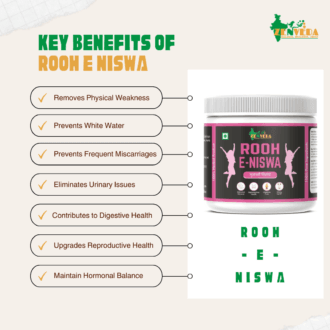
⚡ Quick answer: Zen Veda offers women’s wellness formulas such as Rooh E Niswa, a female health support product made from certified, Uttarakhand-sourced herbs. It is designed to complement a balanced diet, movement and medical care — supporting overall women’s wellbeing rather than claiming to cure PCOD. For personalised guidance, our Vaidyas offer a free consultation.
Zen Veda’s approach to women’s health mirrors this whole-body philosophy. Rooh E Niswa is a female health support formula crafted from certified, Uttarakhand-sourced herbs, intended to complement — never replace — a nourishing diet, regular movement and appropriate medical care. We are deliberately careful with our language: Ayurveda supports your wellbeing and helps the body find balance, and for a diagnosed condition like PCOD it should sit alongside your doctor’s guidance. Explore the wider Zen Veda women’s range for more options.
Want a plan tailored to your body and cycle? You can book a free consultation with our Vaidyas for thoughtful, judgment-free advice.
Frequently asked questions
Can Ayurveda cure PCOD?
Ayurveda does not offer a guaranteed cure, and no responsible source should promise one. What it can do is support the body through diet, lifestyle and herbs that address metabolism and balance. Many women find this improves regularity and wellbeing, ideally alongside their doctor’s care and monitoring.
Which doshas are involved in PCOD?
PCOD typically involves kapha (accumulation and sluggish metabolism) and vata (disturbed menstrual rhythm), with weak agni at the root. The exact pattern varies between individuals, which is why Ayurvedic support is personalised rather than one-size-fits-all.
How long does Ayurvedic PCOD support take?
Because PCOD is metabolic and hormonal, changes are gradual. With consistent diet, lifestyle and herbal support, many women notice improvements over three to six months. It is a patient, cumulative process rather than a quick fix.
Can diet alone help PCOD?
Diet is one of the most powerful tools, especially reducing sugar and refined carbs and supporting agni. It works best combined with movement, stress care and good sleep. For many women, lifestyle change is the single biggest lever in managing PCOD.
Is Ayurveda safe alongside allopathic PCOD treatment?
Ayurvedic diet and lifestyle changes are generally safe and complementary. If you take medication or herbal supplements, tell your doctor so they can watch for any interactions. An integrative approach — modern medicine plus Ayurvedic lifestyle support — is usually the wisest path.
📚 Sources
1. Rao VS, et al. “A Scoping Review of Ayurveda Studies in Women with Polycystic Ovary Syndrome.” Journal of Integrative and Complementary Medicine, 2023. PubMed 36944117
2. Charaka Samhita — classical descriptions of artava dushti and yoni vyapad (menstrual and gynaecological disorders) and the central role of agni.
3. Ashtanga Hridayam — classical Ayurvedic reference for women’s health and dosha balance.
2. Charaka Samhita — classical descriptions of artava dushti and yoni vyapad (menstrual and gynaecological disorders) and the central role of agni.
3. Ashtanga Hridayam — classical Ayurvedic reference for women’s health and dosha balance.
★ 6,500+ happy customers
Ready to start your Ayurvedic hair journey?
Our Vaidyas build personalised herbal routines for you. Free consultation, no obligation.
For Free Consultation Contact +919548121325, +919149171737 | International business inquiry: sahil@zenveda.co.in / +919548121325
Recommended Zen Veda products
Author
