






- Your cart is empty Browse Shop
📌 Quick facts:
- A 2005 community study found leucorrhoea (white discharge) present in a genuinely significant share of married women aged 15-44 surveyed in a rural population.
- Not every product marketed as “the best ayurvedic medicine for white discharge” actually names its ingredients or dosage clearly.
- A trustworthy formula should combine multiple named traditional herbs rather than relying on a single vague “proprietary blend.”
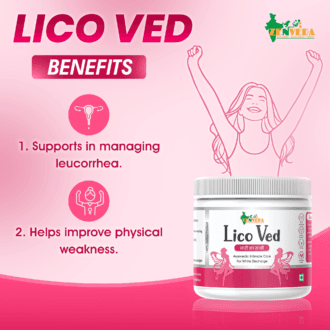
- Lico Ved combines Supari Dakkni, Kamar Kas, Nirmali and Maain Kalan & Khurd in one chemical-free, twice-daily formula.
With so many products now marketed as the best ayurvedic medicine for white discharge, choosing between them can genuinely feel harder than it should be. This guide gives you a practical checklist for evaluating any product in this category honestly, looks at what real research says about how common this concern actually is, and checks how Lico Ved measures up against that checklist directly.
Taking a few extra minutes to compare products properly before buying genuinely matters here, since this is a personal, often under-discussed health topic where it’s easy for confident marketing language to outpace what a product’s actual ingredient list can support.
📋 In this guide
- How common is white discharge, and does everyone need a product for it?
- What actually makes an ayurvedic medicine for white discharge worth buying?
- Which ingredients should you actually check for before buying?
- How should you actually use a product like this for the best results?
- Is it safe to use a product like this alongside other precautions?
- How does Lico Ved compare against this checklist?
- When should you see a doctor instead of relying on a supplement?
- Frequently asked questions
How common is white discharge, and does everyone need a product for it?
⚡ Quick answer: A 2005 community study found leucorrhoea present in a genuinely significant proportion of married women aged 15-44 in the rural population surveyed, confirming it’s a common, everyday concern rather than a rare condition. That said, not every case needs a product — persistent or unusual discharge deserves proper evaluation first.
A 2005 study published in the Journal of Communicable Diseases, examining the prevalence of leucorrhoea among married women aged 15 to 44 in a rural community, found it genuinely present in a significant share of the women surveyed (Jayasree et al., 2005). This context matters honestly before buying anything: white discharge within a normal range is a genuinely common, everyday experience for many women, not something rare or alarming on its own. That said, this doesn’t mean every case is the same — discharge that’s unusual in colour, smell or accompanied by other symptoms deserves proper evaluation rather than being managed with a supplement alone.
What actually makes an ayurvedic medicine for white discharge worth buying?
⚡ Quick answer: A genuinely worthwhile product names its specific herbs clearly, states a clear daily dosage, and is manufactured chemical-free, rather than hiding behind vague “proprietary blend” language. Transparency about what’s actually inside matters far more than confident, persuasive marketing copy alone, no matter how appealing the packaging looks.
The single biggest difference between a genuinely worthwhile product and a purely marketing-led one is transparency: does the label name specific herbs clearly, or does it hide behind a vague “proprietary Ayurvedic blend” with no real indication of what’s actually inside or in what amount? A trustworthy product should also state a clear daily dosage and usage method, and be manufactured without harsh synthetic additives or fillers. None of this alone guarantees results, but its absence is a genuinely reliable early warning sign worth taking seriously before spending any money.
Which ingredients should you actually check for before buying?
⚡ Quick answer: Look for named traditional herbs associated with women’s intimate wellness, such as those used in formulas like Lico Ved, listed clearly rather than hidden behind vague terminology. A product combining several such herbs together is generally better aligned with classical formulation practice than a single-ingredient option.
Classical Ayurvedic formulation practice for this concern has traditionally leaned on cooling, astringent herbs, most famously Lodhra, alongside supportive herbs for general strength and internal balance, combined together rather than relying on one isolated ingredient. When comparing products, check that these kinds of named herbs appear clearly on the label, rather than a generic description that tells you nothing about the actual composition. A product listing several complementary, traditionally-used herbs together is a genuinely better-aligned choice than one built around a single, unnamed extract.
How should you actually use a product like this for the best results?
⚡ Quick answer: Take the stated dose consistently, generally twice daily, as part of an ongoing daily routine rather than only when symptoms happen to feel noticeable. Genuine results build gradually over several weeks of regular use, not from an occasional or inconsistent dose.
Getting genuine value from any Ayurvedic formula in this category comes down largely to consistency: taking the stated dose, generally twice daily, as part of an ongoing daily routine rather than only reaching for it when symptoms happen to feel noticeable. This reflects exactly how Ayurveda has always framed this kind of gentle, cooling herbal support, building gradually over weeks rather than delivering an instant fix. Skipping doses repeatedly tends to undermine the cumulative effect this kind of daily routine is genuinely designed to build over time.
Is it safe to use a product like this alongside other precautions?
⚡ Quick answer: A genuine wellness formula in this category is generally well tolerated for ongoing daily use, but anyone pregnant, nursing, on medication or managing an existing medical condition should genuinely check with a qualified Ayurvedic practitioner or doctor first. This is a sensible precaution, not a reason to avoid herbal support altogether.
A properly formulated Ayurvedic product in this category, built from named traditional herbs rather than harsh synthetic compounds, is generally well tolerated as part of an ongoing daily wellness routine for most healthy adults. That said, “generally well tolerated” is not the same as “suitable for absolutely everyone” — anyone who is pregnant, nursing, currently on medication, or already managing an existing medical condition should genuinely check with a qualified Ayurvedic practitioner or doctor before starting, since individual circumstances can change how any supplement, however gentle, interacts with the body over time.
How does Lico Ved compare against this checklist?
⚡ Quick answer: Lico Ved names its ingredients clearly, Supari Dakkni, Kamar Kas, Nirmali and Maain Kalan & Khurd, states a clear twice-daily dosage, and is formulated chemical-free, meeting every point on the checklist above. It reflects the combined, multi-herb approach classical Ayurveda favours for this concern.
Measured directly against the checklist above, Lico Ved names its ingredients clearly rather than hiding behind vague blend language, states a clear dosage of two capsules morning and two at night with warm milk, and is formulated without harsh synthetic additives or artificial preservatives. It combines several traditional women’s-wellness herbs together rather than isolating one, reflecting the combined, multi-herb approach classical Ayurvedic formulation practice has favoured for this specific concern for generations, rather than a modern single-extract shortcut.
When should you see a doctor instead of relying on a supplement?
⚡ Quick answer: Discharge that’s foul-smelling, discoloured, or accompanied by itching, burning, pelvic pain or fever should be evaluated by a qualified healthcare professional rather than managed with a wellness supplement alone. These symptoms can indicate an infection needing proper diagnosis and treatment.
Honestly recognising the limits of any wellness supplement matters here. Discharge that’s foul-smelling, unusually coloured, or accompanied by itching, burning, pelvic pain or fever is genuinely worth having checked by a qualified healthcare professional promptly, since these signs can point toward an infection or another condition that needs proper diagnosis and, if necessary, medical treatment rather than a herbal supplement alone. A wellness product like Lico Ved is designed to support everyday comfort and balance, not to replace medical evaluation when something feels genuinely unusual.
Ready to check it against the herbs discussed above? Buy genuine Lico Ved directly from Zen Veda. Explore our wider range of Ayurvedic wellness products, or read more on our About Us page.
Have a question before you buy? Reach out to our team — we’re happy to help you decide.
Frequently asked questions
How common is white discharge among women?
Genuinely common — a 2005 community study found it present in a significant share of married women aged 15-44 surveyed in a rural population.
What should I check before buying an ayurvedic medicine for white discharge?
Named traditional herbs listed clearly, a stated dosage, and a chemical-free formulation, rather than a vague “proprietary blend.”
Which ingredients are genuinely worth looking for?
Named cooling, astringent herbs traditionally used for this concern, ideally combined together rather than relying on a single isolated ingredient.
How should I use it for the best results?
Consistently, generally twice daily, as part of an ongoing routine rather than only when symptoms happen to feel noticeable.
Does Lico Ved meet this checklist?
Yes, it names its ingredients clearly, states a clear dosage, and combines several traditional herbs in one chemical-free formula.
When should I see a doctor instead of using a supplement?
If discharge is foul-smelling, discoloured, or comes with itching, pain or fever, have it evaluated by a qualified healthcare professional promptly.
📚 Sources
1. Jayasree, T.M. et al. “Prevalence of leucorrhoea among married women in the age group of 15-44 years in a rural community.” Journal of Communicable Diseases, 2005. PubMed 17278663
2. Charaka Samhita — classical description of Shweta Pradara (white discharge) within Yonivyapad (disorders of the female reproductive tract).
3. Sushruta Samhita — classical Ayurvedic reference on astringent (Kashaya) herbal formulations for women’s wellness.
2. Charaka Samhita — classical description of Shweta Pradara (white discharge) within Yonivyapad (disorders of the female reproductive tract).
3. Sushruta Samhita — classical Ayurvedic reference on astringent (Kashaya) herbal formulations for women’s wellness.
Disclaimer: This article is for educational purposes only and is not a substitute for professional medical advice. Lico Ved is a wellness supplement and is not intended to diagnose, treat, cure or prevent any disease or infection. Persistent, unusual or foul-smelling discharge, or discharge with itching, pain or fever, should be evaluated by a qualified healthcare professional.
★ 6,500+ happy customers
Ready to start your Ayurvedic hair journey?
Our Vaidyas build personalised herbal routines for you. Free consultation, no obligation.
For Free Consultation Contact +919548121325, +919149171737 | International business inquiry: sahil@zenveda.co.in / +919548121325
Recommended Zen Veda products
Author
