




- Your cart is empty Browse Shop
📌 Quick facts:
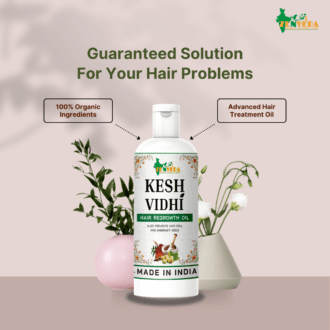
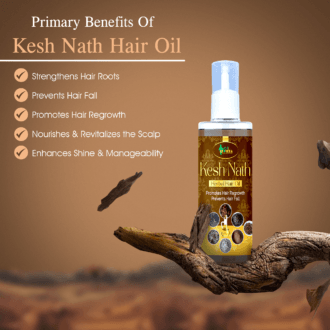
- Kesh Nath and Kesh Vidhi are both Ayurvedic anti-hair-fall oils from Zen Veda, but they’re built on different herb profiles and suited to slightly different needs.
- Kesh Vidhi is Bhringraj-based, a herb with published research on hair growth activity, while Kesh Nath uses a broader blend of keshya (hair-strengthening) herbs.
- Both target hair fall, thinning, dandruff and weak roots — the difference is in emphasis and herb concentration, not in what problems they address.
- “Best ayurvedic hair oil for hair fall” is heavily searched, yet very little content actually compares specific products side by side — this guide does exactly that.
If you’ve landed on Zen Veda’s hair care range, you’ve probably noticed we have two anti-hair-fall oils — Kesh Nath and Kesh Vidhi — and wondered which one is actually right for you. This guide compares them directly: what’s in each, what research supports the key herb in one of them, and how to decide based on your specific hair concern.
Both oils are formulated for the same broad goal — reducing hair fall and supporting healthier regrowth — but they get there with different herb profiles. Understanding that difference makes the choice much easier.
It’s also worth saying upfront that neither option is a “wrong” choice — both are formulated free from harsh chemicals, made for regular scalp massage, and built around herbs with a long history in Ayurvedic hair care. The comparison below is less about ranking one above the other and more about helping you match the right formulation to your specific hair concern, so you’re not left guessing between two similar-looking bottles on a shelf without any real basis for the decision.
📋 In this guide
- What’s actually different between Kesh Nath and Kesh Vidhi?
- What does the research say about Bhringraj for hair growth?
- Which oil is better for hair fall specifically?
- Which oil is better for dandruff?
- Can you use both oils together?
- How long before you see results with either oil?
- Frequently asked questions
What’s actually different between Kesh Nath and Kesh Vidhi?
⚡ Quick answer: Kesh Vidhi is specifically Bhringraj-based with Amla in a sea-coconut oil base, while Kesh Nath uses a broader blend of keshya (hair-strengthening) herbs without a single named lead ingredient. Both target hair fall, thinning and dandruff, but Kesh Vidhi’s formulation is more concentrated around one well-studied classical herb.
Kesh Vidhi is built specifically around Bhringraj (Eclipta alba) and Amla in a sea-coconut oil base — a focused formulation centred on one of Ayurveda’s most well-known hair herbs. Kesh Nath, by contrast, uses a broader blend of keshya (hair-strengthening) herbs without leading on a single named ingredient. Both are 100ml and 50ml oils respectively, suitable for men and women, and both address hair fall, thinning, dandruff and weak roots as their core focus.
What does the research say about Bhringraj for hair growth?
⚡ Quick answer: A study published in the Journal of Ethnopharmacology found that Eclipta alba (Bhringraj) extract showed genuine hair growth-promoting activity in animal testing, supporting its long traditional use in Ayurvedic hair care. This gives Kesh Vidhi’s core ingredient a documented research basis, though it’s animal research rather than a large-scale human clinical trial.
A 2009 study in the Journal of Ethnopharmacology tested Eclipta alba extract and found it demonstrated hair growth-promoting activity (Roy et al., 2009), building on earlier 2008 research in the Archives of Dermatological Research that found similar hair growth-promoting effects in male albino rats (Datta et al., 2008). This is genuinely useful supporting evidence for Bhringraj specifically — it’s worth being clear that both studies are animal research, not large human clinical trials, but they do provide a documented scientific basis for a herb that Ayurveda has used for hair care for centuries.
Which oil is better for hair fall specifically?
⚡ Quick answer: Kesh Vidhi’s concentrated Bhringraj-and-Amla formulation is the more targeted choice if hair fall and slow regrowth are your primary concern, backed by Bhringraj’s specific research. Kesh Nath’s broader herb blend is a solid general-purpose option if you want wider scalp support alongside hair fall control.
If hair fall is your main, specific concern, Kesh Vidhi’s concentrated Bhringraj-and-Amla approach makes it the more targeted option, given Bhringraj’s documented research history for exactly this purpose. That said, Kesh Nath’s broader keshya herb blend isn’t a lesser option — it’s simply designed for wider scalp and hair support rather than concentrating around one specific herb, and remains a solid choice for anyone wanting more general coverage.
Which oil is better for dandruff?
⚡ Quick answer: Both oils list dandruff control among their intended benefits, and neither is specifically formulated as a dedicated anti-dandruff treatment over the other. If dandruff is your primary concern rather than hair fall, either is a reasonable starting point, chosen based on which base oil and scent you personally prefer.
Neither product is positioned specifically as a dandruff-first formulation — both address it as part of broader scalp health support alongside hair fall. In practice, this means the choice for dandruff-focused users often comes down to personal preference around the oil’s base and texture: Kesh Vidhi’s sea-coconut base versus Kesh Nath’s general herbal oil base. Neither has a documented specific advantage over the other purely for dandruff control based on current formulation information, so it’s reasonable to choose based on which scalp feel and consistency you personally find more comfortable to use regularly.
Can you use both oils together?
⚡ Quick answer: Using both isn’t necessary and isn’t typically recommended, since they overlap significantly in purpose — pick one and use it consistently rather than alternating between the two. If you want to try the other later, it’s better to fully test one for several weeks first before switching.
Because both oils target largely the same concerns, using them together doesn’t meaningfully add benefit and just adds cost and complexity. A more useful approach is to pick the one that best matches your primary concern using the guidance above, use it consistently for several weeks, and only consider switching to the other if you feel it isn’t delivering the results you expected. Consistency with one oil beats alternating between two, since your scalp genuinely needs adequate time to properly respond to any single formulation before you can really and fairly judge whether it’s truly working for you.
How long before you see results with either oil?
⚡ Quick answer: Most people using either oil consistently, twice weekly as directed, report noticing reduced hair fall and improved scalp comfort within 4 to 8 weeks. Hair growth changes take longer to become visible, generally requiring several months of consistent use to properly assess.
Hair growth cycles are naturally slow, so patience matters with either oil. Most users massaging consistently, twice weekly as directed, notice reduced hair fall and better scalp comfort within four to eight weeks. Genuine regrowth and thickness changes take longer — generally several months — to properly assess, which is standard for any hair care product, herbal or otherwise, given how hair growth cycles naturally work. Taking a photo of your hairline or parting every few weeks is a simple, practical way to track gradual change that’s genuinely easy to miss day-to-day in the mirror, especially with subtle, incremental improvement.
Compare Kesh Nath and Kesh Vidhi directly, or browse our full range of Ayurvedic wellness products to see everything available.
Still not sure which suits your hair? Reach out to our team for honest, personalised guidance.
Frequently asked questions
Which is better, Kesh Nath or Kesh Vidhi?
Neither is universally “better” — Kesh Vidhi’s concentrated Bhringraj formula suits those focused specifically on hair fall, while Kesh Nath’s broader herb blend suits general scalp and hair support.
Does Kesh Vidhi contain Bhringraj?
Yes, Bhringraj (Eclipta alba) and Amla are the two named lead ingredients in Kesh Vidhi’s sea-coconut oil base.
Can I use these hair oils if I have dandruff?
Yes, both oils list dandruff control among their intended benefits alongside hair fall support, so either is a reasonable option.
How often should I apply these hair oils?
Both are directed for warm application, massaged into the scalp twice a week, as part of a consistent routine rather than daily use.
Is there scientific research behind Bhringraj for hair?
Yes, published studies have found Eclipta alba (Bhringraj) extract shows hair growth-promoting activity, though this research is from animal studies rather than large human clinical trials.
Are these oils suitable for both men and women?
Yes, both Kesh Nath and Kesh Vidhi are formulated to be suitable for men and women alike.
📚 Sources
1. Roy, R.K. et al. “Eclipta alba extract with potential for hair growth promoting activity.” Journal of Ethnopharmacology, 2009. PubMed 19481595
2. Datta, K. et al. “Hair growth promoting activity of Eclipta alba in male albino rats.” Archives of Dermatological Research, 2008. PubMed 18478241
3. Charaka Samhita — classical description of keshya (hair-strengthening) herbs and their use in scalp care.
4. Ashtanga Hridayam — classical Ayurvedic reference for oil massage (abhyanga) and scalp health.
2. Datta, K. et al. “Hair growth promoting activity of Eclipta alba in male albino rats.” Archives of Dermatological Research, 2008. PubMed 18478241
3. Charaka Samhita — classical description of keshya (hair-strengthening) herbs and their use in scalp care.
4. Ashtanga Hridayam — classical Ayurvedic reference for oil massage (abhyanga) and scalp health.
Disclaimer: This article is for educational purposes only and is not a substitute for personalised medical advice. Individual results vary. Please consult a qualified Ayurvedic practitioner or your healthcare provider before starting any new treatment, especially if you have an underlying scalp or skin condition.
★ 6,500+ happy customers
Ready to start your Ayurvedic hair journey?
Our Vaidyas build personalised herbal routines for you. Free consultation, no obligation.
For Free Consultation Contact +919548121325, +919149171737 | International business inquiry: sahil@zenveda.co.in / +919548121325
Recommended Zen Veda products
Author
