






- Your cart is empty Browse Shop
📌 Quick facts:
- Belly fat isn’t just a cosmetic concern — visceral fat around the abdomen is one of the strongest predictors of fatty liver.
- A 2022 study found visceral fat measures correlate more strongly with fatty liver than overall body weight or BMI alone does.
- You can have a “normal” BMI and still carry enough visceral fat to genuinely affect your liver — this is common and often missed entirely.
- Ayurveda links abdominal fat accumulation to excess kapha and weak agni, addressed through diet, movement and digestion support.
Waist size tends to get treated mostly as a cosmetic concern, but the fat sitting around your abdomen is doing something far more consequential than affecting how your clothes fit. Visceral fat — the fat wrapped around internal organs, not just under the skin — has one of the strongest links to fatty liver of any single measurement. This guide explains that connection, what recent research shows, and how Ayurveda approaches abdominal fat and liver health together.
Understanding this link matters because waist measurement, unlike weight alone, gives you a genuinely useful early clue about liver health — one that’s easy to track yourself between doctor visits. A simple measuring tape at home can tell you something a bathroom scale never will, especially if your weight has stayed roughly stable while your waistline has quietly crept up over the years.
📋 In this guide
- Why does belly fat specifically affect the liver?
- What does recent research say about this connection?
- Can you have fatty liver with a normal BMI?
- How does Ayurveda view abdominal fat and liver health together?
- What actually reduces visceral fat and supports the liver together?
- How does Zen Veda support liver and metabolic health together?
- Frequently asked questions
Why does belly fat specifically affect the liver?
⚡ Quick answer: Visceral fat — the fat stored around abdominal organs — releases fatty acids and inflammatory signals directly into the bloodstream heading to the liver, unlike fat stored elsewhere in the body. This direct pathway makes visceral fat a much stronger driver of fatty liver than subcutaneous fat under the skin.
Not all body fat behaves the same way. Visceral fat, packed around the abdominal organs including the liver itself, is metabolically active and releases free fatty acids and inflammatory compounds directly into the portal blood supply that feeds the liver. This creates a much more direct route for fat and inflammation to reach and accumulate in liver tissue compared with subcutaneous fat sitting under the skin elsewhere on the body. This is precisely why waist circumference often predicts fatty liver risk better than overall weight or even BMI.
What does recent research say about this connection?
⚡ Quick answer: A 2022 study found that visceral adiposity measures correlate more strongly with non-alcoholic fatty liver disease than general obesity indicators, confirming that where fat is stored matters as much as how much total fat someone carries. This holds true even in people who aren’t considered overweight by standard measures.
A study published in Frontiers in Endocrinology (2022) examining abdominal obesity indices and non-alcoholic fatty liver disease found that visceral adiposity index measures showed a stronger association with NAFLD than general obesity markers alone, reinforcing that fat distribution, not just total body weight, is a key predictor. This finding is especially useful for people who fall within a “normal” weight range but still carry meaningful abdominal fat — a group that can easily be missed by weight or BMI screening alone. You can read the study on PubMed (ID 35360076).
Can you have fatty liver with a normal BMI?
⚡ Quick answer: Yes, this is more common than many people realise. Someone with a “normal” BMI can still carry significant visceral fat around the abdomen, putting them at real risk for fatty liver despite looking outwardly slim. Waist circumference is often a more useful everyday indicator than BMI alone for this reason.
This pattern, sometimes called “normal weight obesity” or “skinny fat,” catches many people off guard precisely because it doesn’t match the usual mental image of who’s at risk for fatty liver. Genetics, inactivity, and diet quality all influence how much visceral fat someone accumulates independent of overall body weight, meaning two people with identical BMI can have very different amounts of liver-affecting abdominal fat, sometimes for reasons that have little to do with willpower or effort. A simple waist measurement — generally a concern above roughly 90cm for men and 80cm for women, though exact cutoffs vary — is a practical, low-cost way to catch this pattern that a bathroom scale alone would miss entirely.
How does Ayurveda view abdominal fat and liver health together?
⚡ Quick answer: Ayurveda links abdominal fat accumulation to excess kapha dosha and weakened agni, viewing both belly fat and liver stress as connected expressions of the same underlying metabolic imbalance. Support focuses on rekindling digestion and reducing kapha-aggravating foods, addressing both concerns together rather than separately.
Ayurveda has always treated abdominal fat and liver function as closely connected rather than separate concerns, both linked to excess kapha dosha and weakened agni allowing meda dhatu (fat tissue) to accumulate, particularly in the abdominal region. This integrated view matches the modern understanding that visceral fat and liver fat often rise and fall together, driven by the same underlying metabolic factors. Traditional support emphasises rekindling digestive fire, reducing heavy and sweet foods that aggravate kapha, and herbs like guggulu and triphala traditionally used to support healthy fat metabolism, alongside regular movement and medical monitoring.
What actually reduces visceral fat and supports the liver together?
⚡ Quick answer: Regular aerobic exercise, reducing sugar and refined carbs, and gradual sustainable weight loss all specifically target visceral fat more effectively than general dieting alone. Because visceral fat responds well to exercise in particular, even modest, consistent activity produces a noticeable reduction over a few months.
| Helps reduce visceral fat | Worsens it |
|---|---|
| Regular aerobic exercise | Prolonged inactivity |
| Reduced sugar and refined carbs | High sugar, processed food |
| Gradual, sustained weight loss | Yo-yo dieting |
| Adequate sleep, stress management | Chronic stress, poor sleep |
Visceral fat responds particularly well to regular aerobic exercise, often reducing measurably even before overall body weight changes significantly — one reason exercise deserves equal billing with diet in any plan targeting this specific type of fat. Reducing sugar and refined carbohydrates addresses the insulin resistance that drives both visceral fat accumulation and liver fat together. Aim for gradual, sustained weight loss rather than crash dieting, since rapid weight cycling can be counterproductive. Sleep and stress management matter more than most people expect too, since poor sleep and chronic stress both raise cortisol, which specifically promotes abdominal fat storage. Tracking your waist measurement monthly, rather than obsessing over the scale daily, is often a more encouraging and more medically meaningful way to watch this particular type of progress.
How does Zen Veda support liver and metabolic health together?
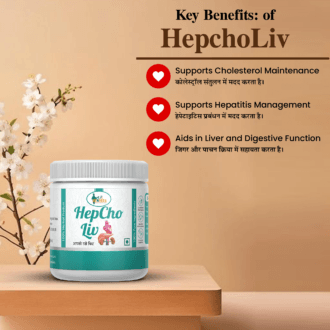
⚡ Quick answer: Zen Veda’s HepCho Liv is a herbal formula traditionally used to support healthy liver function and fat metabolism, made from certified, Uttarakhand-sourced herbs. It works best alongside regular exercise and reduced sugar intake — the two changes most specifically effective against visceral fat and liver fat together.
HepCho Liv is formulated from certified, Uttarakhand-sourced herbs traditionally used to support healthy liver function and fat metabolism. We recommend it alongside regular exercise and reduced sugar intake, since these two changes specifically target the visceral fat driving much of the liver-related risk discussed here. Explore the wider Zen Veda range, or learn more on our About Us page.
Want a practical plan for your own waistline and liver health? You can book a free consultation with our Vaidyas for personalised guidance suited to your body and daily routine.
Frequently asked questions
Does belly fat cause fatty liver?
Visceral belly fat is one of the strongest known predictors of fatty liver, since it releases fat and inflammatory compounds directly into the blood supply feeding the liver.
Can you have fatty liver with a normal weight?
Yes, someone with a normal BMI can still carry significant visceral fat, putting them at genuine risk for fatty liver despite appearing outwardly slim to others.
What waist size is considered a concern?
Generally, a waist circumference above roughly 90cm for men and 80cm for women is considered a concern, though exact cutoffs vary somewhat by population and specific guideline used.
Does exercise reduce visceral fat specifically?
Yes, visceral fat responds particularly well to regular aerobic exercise, often reducing measurably even before overall body weight changes significantly or noticeably.
Does Ayurveda address belly fat and liver health together?
Yes, Ayurveda views both as closely connected to excess kapha dosha and weak agni, addressing them together through diet, digestion support and regular daily movement.
📚 Sources
1. “Associations Between Abdominal Obesity Indices and Nonalcoholic Fatty Liver Disease: Chinese Visceral Adiposity Index.” Frontiers in Endocrinology, 2022. PubMed 35360076
2. Charaka Samhita — classical descriptions of meda dhatu, kapha dosha and abdominal fat.
3. Ashtanga Hridayam — classical Ayurvedic reference for digestion, agni and metabolic balance.
2. Charaka Samhita — classical descriptions of meda dhatu, kapha dosha and abdominal fat.
3. Ashtanga Hridayam — classical Ayurvedic reference for digestion, agni and metabolic balance.
Disclaimer: This article is for educational purposes only and is not a substitute for personalised medical advice. Individual results vary. Please consult a qualified Ayurvedic practitioner or your healthcare provider before starting any new treatment, especially if you are managing a medical condition or taking medication.
★ 6,500+ happy customers
Ready to start your Ayurvedic hair journey?
Our Vaidyas build personalised herbal routines for you. Free consultation, no obligation.
For Free Consultation Contact +919548121325, +919149171737 | International business inquiry: sahil@zenveda.co.in / +919548121325
Recommended Zen Veda products
Author
