



- Your cart is empty Browse Shop
📌 Quick facts:
- Ayurveda views skin as the outermost of seven dhatus (tissues), genuinely reflecting the health of everything beneath it rather than existing in complete isolation.
- A 2021 systematic review genuinely confirms nutrition influences skin structure, supporting Ayurveda’s long-standing, centuries-old nutrition-first approach to skin health overall.
- Skin quality is traditionally linked to Rasa dhatu (the first tissue layer, formed directly from digested nutrition) and overall Agni, the digestive fire.
- Topical care, including regular daily oil massage, is genuinely considered a complement to internal nourishment rather than a full replacement for it.
Modern, conventional skin care today often treats the skin purely as a surface, one to be treated directly and repeatedly with an ever-growing rotation of creams, serums and targeted treatments purchased off a store shelf. Ayurveda takes a meaningfully different view — one that sees skin as a visible reflection of what’s happening throughout the body. This guide explains carefully how Ayurveda understands skin and tissue health, what genuine research says about nutrition’s role, and exactly how topical and internal care fit together in practice.
Understanding this framework genuinely matters because it shifts skin care from a purely external, product-driven exercise toward something considerably more holistic and genuinely sustainable — one that tends to produce more lasting, noticeable results than topical treatment pursued entirely alone, in isolation from everything else going on internally.
📋 In this guide
- How does Ayurveda classify the body’s tissues?
- Does nutrition actually influence skin, according to research?
- What role does digestion specifically play in skin health?
- Where does topical care, like oil massage, fit into this picture?
- Why do results from topical products alone sometimes disappoint?
- How can this dual approach be applied practically?
- Frequently asked questions
How does Ayurveda classify the body’s tissues?
⚡ Quick answer: Ayurveda describes seven dhatus, or tissue layers, formed in sequence from digested nutrition — Rasa (plasma/nutrient fluid), Rakta (blood), Mamsa (muscle), Meda (fat), Asthi (bone), Majja (marrow) and Shukra (reproductive tissue). Skin health is closely tied to the earliest, Rasa dhatu.
Classical Ayurveda genuinely and consistently describes the body as being built from seven sequential tissue layers, or dhatus, each one formed from the layer before it, beginning with Rasa — the nutrient-rich fluid produced directly from properly digested food. Skin health is closely associated with this very first layer, meaning that what happens right at the very start of the digestive and nutritional process has a direct, traceable line to how skin ultimately looks, feels and gradually ages over time. This is a genuinely different starting point from treating skin as an isolated organ to be addressed purely from the outside in, with no meaningful reference at all to anything happening deeper within the body itself.
Does nutrition actually influence skin, according to research?
⚡ Quick answer: Yes, genuinely. A 2021 systematic review and meta-analysis confirms that nutritional factors, including collagen-supporting nutrients, measurably influence skin structure and appearance over time. This gives modern scientific backing to Ayurveda’s long-standing traditional position that skin quality genuinely reflects internal nourishment overall.
A 2021 systematic review and meta-analysis published in the International Journal of Dermatology carefully examined the effects of nutritional supplementation on skin structure, confirming that specific nutritional inputs genuinely and measurably influence skin elasticity, hydration and overall appearance over an extended period of time (Choi et al., 2021). This finding genuinely lends real, tangible scientific weight to a principle Ayurveda has held for many centuries — that skin quality is fundamentally inseparable from internal nourishment, not simply a matter of what’s applied topically each morning and night. The research and the traditional framework arrive at a strikingly similar practical conclusion, despite starting from entirely different places and centuries apart.
What role does digestion specifically play in skin health?
⚡ Quick answer: A central one, in Ayurvedic thinking. Since Rasa dhatu forms directly from digested food, weak or irregular digestion (Agni) is believed to produce poorly nourished Rasa, which in turn is thought to show up as dull, dry or uneven-looking skin, regardless of what’s applied externally.
Because Rasa dhatu is formed directly from digested food, Ayurveda places considerable emphasis on Agni, digestive fire, as foundational to skin quality. Weak, irregular or genuinely overburdened digestion is thought to produce poorly formed Rasa, which shows up gradually over time as dull, dry or uneven-looking skin — regardless of how diligent or consistent someone is with topical products applied daily. This is a genuinely useful reframe for anyone who has tried numerous external products without seeing the results they genuinely hoped for: the actual issue may lie considerably further upstream than the skin’s surface, somewhere in the ordinary digestive process quietly feeding it every single day.
Where does topical care, like oil massage, fit into this picture?
⚡ Quick answer: Topical oil massage is considered a genuine complement to internal nourishment, not a substitute for it. Massage is valued both for its own nourishing, moisturising effect on skin and for supporting circulation, working alongside — rather than instead of — good digestion and diet.
None of this means topical care is somehow unimportant or dispensable — Ayurveda has an extensive, well-documented tradition of oil-based skin massage, valued both for its direct moisturising and nourishing effect on skin and for supporting circulation during application. The key distinction is that it’s genuinely positioned as a complement to internal nourishment, working alongside good digestion and diet, rather than as a standalone fix somehow expected to fully compensate for poor Agni or inadequate nutrition on its own. Skin care, in this particular view, genuinely works best as a two-front approach, addressed from both inside and outside together consistently, rather than as a purely external, surface-level one.
Why do results from topical products alone sometimes disappoint?
⚡ Quick answer: When internal nourishment and digestion are neglected, topical products are working against an under-supported foundation, which can genuinely limit visible results. Addressing both the internal and external sides together tends to produce more noticeable, lasting improvement than either approach alone.
This framework offers a genuinely plausible explanation for a very common frustration: topical products that seem to consistently underdeliver despite diligent, patient, consistent use over many months. If Rasa dhatu is poorly nourished due to weak digestion, poor diet or chronic stress, a topical product is essentially working against an under-supported foundation, which can genuinely cap how much visible improvement is achievable from the outside alone. Addressing digestion, diet and stress alongside a topical routine, rather than relying on topical care exclusively, tends to produce results that are both more noticeable and considerably more durable over time.
How can this dual approach be applied practically?
⚡ Quick answer: Support digestion through regular, balanced meals and adequate hydration, include nutrient-dense whole foods, manage stress, and pair this with consistent, gentle topical oil massage. Neither side alone tends to work as well as the two practised together, consistently, over time.
In practice, this genuinely means supporting digestion through regular, consistent meal timing, adequate hydration and a diet built firmly around nutrient-dense whole foods, while also managing chronic stress, which is well known to disrupt digestive function quite considerably over time. Pairing this internal foundation with a consistent, gentle topical oil massage routine genuinely addresses both sides of the equation Ayurveda has long described in its classical texts. Neither element alone tends to be nearly as effective as the two practised together, consistently, over a genuinely meaningful stretch of time rather than as a short-term experiment abandoned after a couple of disappointing weeks.
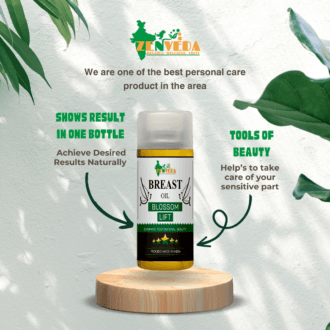
Blossom Lift by Zen Veda is an Ayurvedic massage oil for women’s breast skin care, made to nourish skin and support firmness, smoothness and elasticity through a gentle daily ritual. Explore our wider range of Ayurvedic wellness products, or read more on our About Us page.
Want personalised guidance for your self-care routine? Reach out to our team.
Frequently asked questions
How does Ayurveda classify skin among the body’s tissues?
Skin is closely tied to Rasa dhatu, the very first of seven sequential tissue layers formed directly from properly digested daily nutrition.
Does nutrition really affect skin quality?
Yes, a 2021 systematic review genuinely confirms nutritional factors measurably influence skin elasticity, hydration and overall appearance over time.
Why does Ayurveda emphasise digestion for skin health?
Because Rasa dhatu forms directly from digested food, weak Agni is thought to produce poorly nourished tissue, gradually showing up over time as dull, tired-looking skin.
Is topical oil massage still valuable in this view?
Yes, it’s considered a genuine and valuable complement to internal nourishment, prized for its own moisturising and circulation-supporting effects.
Why might topical products alone underdeliver?
If internal nourishment and digestion are genuinely neglected, topical care works against an under-supported foundation, limiting how visible the results can be.
📚 Sources
1. Choi, F. D. et al. “Effects of hydrolyzed collagen supplementation on skin aging: a systematic review and meta-analysis.” International Journal of Dermatology, 2021. PubMed 33742704
2. Charaka Samhita — classical description of the seven dhatus and Rasa dhatu‘s relationship to skin.
3. Ashtanga Hridayam — classical Ayurvedic reference on Agni, nourishment and topical oil therapies.
2. Charaka Samhita — classical description of the seven dhatus and Rasa dhatu‘s relationship to skin.
3. Ashtanga Hridayam — classical Ayurvedic reference on Agni, nourishment and topical oil therapies.
Disclaimer: This article is for educational purposes only and is not a substitute for professional dermatological or medical advice. Individual skin conditions vary. If you have persistent skin concerns, please consult a qualified healthcare professional.
★ 6,500+ happy customers
Ready to start your Ayurvedic hair journey?
Our Vaidyas build personalised herbal routines for you. Free consultation, no obligation.
For Free Consultation Contact +919548121325, +919149171737 | International business inquiry: sahil@zenveda.co.in / +919548121325
Recommended Zen Veda products
Author
