



- Your cart is empty Browse Shop
📌 Quick facts:
- Dal chawal is not the villain — it is a wholesome, complete meal. The modern office routine around it is the real problem.
- Hours of sitting, cold AC air and no post-meal movement weaken agni, your digestive fire, so food half-digests.
- A 2016 trial found a short walk after meals cut post-meal blood sugar by up to 22% versus general activity.
- Ayurveda’s fix is centuries old: keep warm, eat mindfully, and take a few hundred steps after eating (Shatapavali).
Divya eats what everyone would call a healthy lunch — dal, rice, a little sabzi — packed from home. Yet by 4 p.m. she is bloated, foggy and reaching for a third cup of chai to feel awake. She has started to blame the dal chawal itself. It is the wrong suspect. The food on her plate is fine; it is everything around it — the freezing office AC, the desk she never leaves, the meal eaten in ten distracted minutes, the hours of sitting that follow — that is quietly dismantling her digestion.
This is one of the most common and most misunderstood digestive problems in urban India. Ayurveda saw the pattern clearly: it is not what the modern professional eats so much as how and where they eat it. Here is why office life weakens digestion, and how to protect your agni without quitting your job.
📋 In this guide
Why does modern office life weaken your digestion?
⚡ Quick answer: Modern office life works against your digestion in small, constant ways: hours of sitting, cold AC air, hurried meals at your desk, endless tea and coffee, and no movement afterward. Ayurveda says all of this dampens agni — your digestive fire — so even a wholesome meal is only half-digested, leaving you bloated and heavy.
Ayurveda measures digestive health by the strength of agni, the metabolic “fire” that turns food into nourishment. The Charaka Samhita is emphatic that agni thrives on warmth, regularity and movement — and almost everything about a desk job undercuts all three. You sit for eight hours, so the gut barely moves. You work in cold, dry AC, which Ayurveda says directly cools digestion. You eat in a rush, distracted by a screen, so the body never gets the signal to digest properly. Layer stress and constant caffeine on top, and a perfectly good meal ferments instead of nourishing.
Is dal chawal actually bad for you?
⚡ Quick answer: No — dal chawal is a near-perfect, complete meal of protein and carbohydrate that Ayurveda considers wholesome and easy to digest. The problem is rarely the food; it is how it is eaten: cold or reheated, rushed at a desk, in large portions, followed by hours of sitting. Fix the habits and dal chawal is ideal.
Let us clear the good name of a national staple. Dal chawal is, nutritionally and in Ayurvedic terms, close to ideal — a complete protein-and-carbohydrate pairing that is warm, soft and easy on the gut when freshly cooked. Khichdi, its close cousin, is literally the meal Ayurveda prescribes to heal weak digestion. So the problem is almost never the dish. It is the cold, reheated, over-large, desk-eaten, followed-by-sitting version of it. Change those conditions and the same plate becomes exactly the nourishing, easy meal it was always meant to be.
How does sitting in AC after meals affect digestion?
⚡ Quick answer: Digestion runs on warmth and gentle movement. Sitting still in a cold, air-conditioned room straight after eating cools your agni and slows the gut, so food lingers and ferments into gas and heaviness. Ayurveda’s remedy is old and simple: keep the body warm and take a short, easy walk after meals rather than slumping at your desk.
Think of agni like a cooking flame: warmth feeds it, cold smothers it. Eating a warm meal and then immediately parking yourself in a chilled, air-conditioned cabin for three hours is like turning the stove down just as the food goes in. Blood that should be aiding digestion is not helped by stillness, the gut’s natural rhythm slows, and food sits longer than it should — the exact stagnation that produces gas, bloating and that heavy, sleepy afternoon slump. The antidote is not complicated: warmth and a little movement.
What does research say about moving after meals?
⚡ Quick answer: A 2016 trial in Diabetologia had 41 adults either take one 30-minute daily walk or three short 10-minute walks after meals. The after-meal walkers lowered their post-meal blood sugar by around 12 percent overall — and 22 percent after dinner. Even a brief stroll after eating measurably improves how the body handles a meal.
Ayurveda’s advice to walk after eating now has firm modern backing. Reynolds and colleagues published a randomized crossover trial in Diabetologia (2016;59(12):2572–2578) comparing two habits in 41 adults: a single 30-minute walk each day, versus three short 10-minute walks taken after each main meal. The after-meal walking clearly won — post-meal blood glucose fell by about 12% overall and a striking 22% after the evening meal. In other words, when you move matters, and a brief post-meal walk helps your body process food far better than sitting still. It is the modern proof of the old Ayurvedic Shatapavali. Read it on PubMed (ID 27747394).
How can you protect your agni at a desk job?
⚡ Quick answer: Eat a warm, freshly cooked lunch away from your desk, and take a gentle 10-minute walk afterward — the Ayurvedic Shatapavali, or hundred steps. Keep a shawl handy against the AC, sip warm water instead of iced drinks, and let dinner be lighter and earlier. Small warmth-and-movement habits keep agni strong.
| Office habit | What it does | Ayurvedic swap |
|---|---|---|
| Eating at your desk | Distracted, rushed digestion | Step away; eat warm and mindfully |
| Sitting after lunch | Food stagnates, bloating | A 10-minute post-meal walk |
| Cold AC + iced drinks | Cools and slows agni | A shawl and warm water |
| Heavy late dinner | Overnight indigestion | Lighter, earlier dinner |
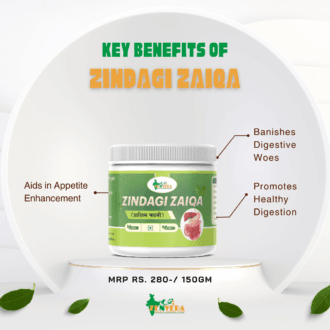
How does Zen Veda’s Zindagi Zaiqa help?
⚡ Quick answer: Zen Veda’s Zindagi Zaiqa is an Ayurvedic digestive blend of classical carminative herbs and spices made to kindle agni, ease gas and bloating, and support the digestion that a sedentary, air-conditioned routine weakens. Used alongside warm meals and a short post-lunch walk, it helps your body get the most from every dal-chawal plate.
Better habits do the heavy lifting, but a good digestive gives your agni a daily, dependable nudge — especially useful when the AC and the chair are non-negotiable. Zen Veda’s Zindagi Zaiqa combines the classical carminative herbs and warming spices Ayurveda relies on to kindle digestion and ease post-meal gas and heaviness. Pair it with a warm lunch and a short walk, and browse the full Zen Veda range for everyday wellness.
If bloating and sluggish digestion are a daily story despite better habits, you can book a free consultation with our Vaidyas for a plan built around your routine and dosha.
Frequently asked questions
Is dal chawal good or bad for digestion?
Good. Freshly cooked dal chawal is a warm, complete, easy-to-digest meal Ayurveda considers wholesome. Problems come from eating it cold, rushed, in large portions, or followed by hours of sitting — not from the food itself.
Why does sitting in AC affect digestion?
Ayurveda says digestion depends on warmth, and cold air-conditioned environments cool agni, the digestive fire. Combined with stillness after eating, this slows the gut so food lingers and ferments, causing gas, bloating and heaviness.
Does walking after meals really help?
Yes. A 2016 study found that short 10-minute walks after meals lowered post-meal blood sugar by about 12% overall and 22% after dinner — better than a single longer walk. Even a brief stroll helps your body process a meal.
How can I improve digestion with a desk job?
Eat a warm lunch away from your screen, walk for ten minutes afterward, keep a shawl against the AC, sip warm water, and keep dinner light and early. These small warmth-and-movement habits steadily strengthen digestion.
What is agni in Ayurveda?
Agni is the digestive fire — the body’s capacity to break down food into nourishment. When it is strong, digestion is smooth; when weak, food ferments into Ama (toxic residue), causing gas, bloating and low energy.
📚 Sources
1. Reynolds AN, Mann JI, Williams S, Venn BJ. “Advice to walk after meals is more effective for lowering postprandial glycaemia in type 2 diabetes mellitus than advice that does not specify timing: a randomised crossover study.” Diabetologia, 2016;59(12):2572–2578. PubMed 27747394
2. Charaka Samhita & Ashtanga Hridayam — classical Ayurvedic references on Agni (digestive fire) and Shatapavali (a short walk after meals).
2. Charaka Samhita & Ashtanga Hridayam — classical Ayurvedic references on Agni (digestive fire) and Shatapavali (a short walk after meals).
★ 6,500+ happy customers
Ready to start your Ayurvedic hair journey?
Our Vaidyas build personalised herbal routines for you. Free consultation, no obligation.
For Free Consultation Contact +919548121325, +919149171737 | International business inquiry: sahil@zenveda.co.in / +919548121325
Recommended Zen Veda products
Author
