






- Your cart is empty Browse Shop
📌 Quick facts:
- Oil itself doesn’t make hair grow faster — the massage technique used while applying it is what actually produces a measurable effect.
- A 2016 study found that standardized scalp massage increased hair thickness by mechanically stretching cells in the hair follicle’s dermal papilla.
- Oiling too frequently or too heavily can actually trap dirt and clog follicles rather than help them, especially without proper washing.
- Ayurveda has recommended regular scalp abhyanga (oil massage) for centuries — modern research is only now explaining the mechanical reason it may genuinely help.
“Does oiling your hair every day make it grow?” is one of the most common questions in hair care, and the honest answer is more nuanced than a simple yes or no. This guide breaks down what’s actually happening when you oil your hair, what research says about the mechanism involved, and how often you genuinely need to do it for real benefit.
The short version: it’s not really about the oil sitting on your scalp. It’s about what you do while applying it — and that distinction changes how you should be approaching your hair care routine entirely.
It’s a distinction worth sitting with, because it reframes the entire habit. Many people apply oil quickly, almost as an afterthought, before rushing off to wash it out an hour later. If the massage is what’s actually doing the work, that rushed approach is likely leaving most of the potential benefit on the table entirely. Slowing down and treating the massage itself as the main event, rather than the oil, is a simple mindset shift that changes how effective the whole routine actually is.
📋 In this guide
- Does oiling your hair every day actually make it grow faster?
- What does the massage itself do that the oil alone doesn’t?
- Can oiling too often actually harm your hair?
- What does research say about scalp massage and hair thickness?
- Does the type of oil matter as much as the massage technique?
- How often should you actually oil your hair for real benefit?
- Frequently asked questions
Does oiling your hair every day actually make it grow faster?
⚡ Quick answer: Not directly — oil sitting on the scalp doesn’t penetrate the follicle to trigger faster growth on its own. What actually helps is the massage motion used to apply it, which mechanically stimulates the hair follicle in a way plain oil application doesn’t.
This is the core myth worth correcting: oil itself, simply sitting on the scalp, doesn’t chemically signal hair follicles to grow faster. Hair grows from the follicle beneath the skin, and oil applied on top primarily nourishes the hair shaft and scalp surface rather than directly accelerating the growth cycle. The real benefit comes from what typically happens alongside oiling — the massage.
What does the massage itself do that the oil alone doesn’t?
⚡ Quick answer: Massage physically stretches the tissue around the hair follicle, and this mechanical stretching has been shown to trigger cellular responses linked to increased hair thickness. This is a genuinely different mechanism from simply moisturizing the scalp with oil and letting it sit.
The act of massaging — the circular, gentle pressure applied with fingertips — physically stretches the skin and connective tissue surrounding the hair follicle. This mechanical stretching appears to trigger cellular signals within the dermal papilla, the structure at the base of the follicle responsible for regulating hair growth. In other words, it’s the hands-on technique, not the oil sitting passively on the scalp, doing most of the actual work. This is exactly why two people using the identical oil can see quite different results, simply depending on whether one is genuinely massaging thoroughly and carefully, and the other is merely applying it and quickly moving on to something else entirely.
Can oiling too often actually harm your hair?
⚡ Quick answer: Yes — oiling too heavily or too frequently without proper washing can trap dirt, dust and excess sebum against the scalp, potentially clogging follicles and worsening dandruff. More oil, applied more often, is not automatically better for hair or scalp health.
This is a genuinely important caution. Daily heavy oiling, especially if it isn’t washed out properly, can leave a residue that traps environmental dirt and excess natural oil against the scalp. For some people, particularly those prone to dandruff or oily scalps, this can actually worsen scalp conditions rather than help them. The goal is a clean, well-massaged scalp — not a permanently oil-coated one. If your scalp still feels heavy or greasy well into the next day after washing, that’s usually a reliable sign you’re applying more oil, more often, than your scalp actually needs to benefit.
What does research say about scalp massage and hair thickness?
⚡ Quick answer: A 2016 study published in Eplasty found that standardized scalp massage increased hair thickness, attributing the effect to mechanical stretching forces acting on dermal papilla cells beneath the scalp. This gives a genuine, mechanism-based explanation for a practice Ayurveda has recommended for centuries.
A 2016 study published in Eplasty found that standardized scalp massage resulted in increased hair thickness, and proposed that mechanical stretching forces transmitted to dermal papilla cells in the subcutaneous tissue were responsible (Koyama et al., 2016). This is a genuinely useful finding because it moves scalp massage from “traditional wisdom” into a category with an actual proposed biological mechanism — one that lines up closely with centuries of Ayurvedic recommendation for regular scalp abhyanga.
Does the type of oil matter as much as the massage technique?
⚡ Quick answer: The massage technique appears to matter more for the specific growth-related mechanism studied, but oil choice still matters for scalp nourishment, dandruff control and overall hair condition. Classical herbs like Bhringraj add their own traditional benefits on top of the massage effect.
Based on current research, the massage technique itself appears central to the mechanical growth-related effect. That doesn’t make oil choice irrelevant, though — a well-formulated herbal oil still nourishes the scalp, helps with dandruff, and conditions the hair shaft in ways plain massage without any oil wouldn’t achieve. Classical herbs such as Bhringraj bring their own additional traditional benefits, working alongside, not instead of, the massage technique. Think of the oil as the vehicle that makes a longer, more comfortable massage practical and enjoyable, while also delivering its own separate nourishing properties to the scalp and hair shaft along the way.
How often should you actually oil your hair for real benefit?
⚡ Quick answer: Two to three times a week, with a proper 5 to 10 minute massage each time and thorough washing afterward, is generally more effective than daily light application without real massage. Consistency and technique matter far more than sheer frequency alone.
Rather than oiling daily out of habit, focus on two to three sessions a week with a genuine, unhurried massage — five to ten minutes of proper circular pressure — followed by thorough washing to avoid residue buildup. This approach captures the real mechanical benefit of massage while avoiding the downsides of excessive, poorly-washed daily oiling. Quality and consistency of technique matter far more than how many days a week you technically apply oil. A rushed, thirty-second rub twice a day is genuinely less useful than one unhurried, properly paced session every two or three days, done with real attention and patience.
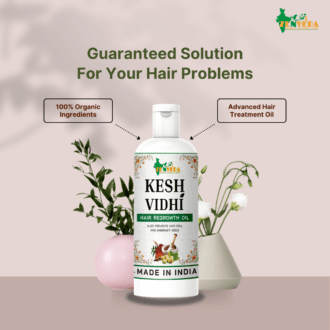
Kesh Vidhi by Zen Veda is a Bhringraj-based Ayurvedic hair oil formulated for exactly this kind of regular, proper scalp massage routine. Explore our wider range of Ayurvedic wellness products, or read more on our About Us page.
Want personalised advice for your hair care routine? Reach out to our team.
Frequently asked questions
Does oiling hair daily make it grow faster?
Not directly — the oil itself doesn’t accelerate growth, but the massage motion used while applying it has a genuine, research-supported mechanical effect on hair thickness.
Can too much hair oil be bad for you?
Yes, excessive oiling without proper washing can trap dirt and worsen dandruff or scalp conditions, so more oil applied more often isn’t automatically better.
Is scalp massage backed by research?
Yes, a 2016 study found standardized scalp massage increased hair thickness, attributing this to mechanical stretching forces affecting dermal papilla cells in the follicle.
How long should a scalp massage last?
Around 5 to 10 minutes of unhurried, circular pressure is generally recommended, done two to three times a week rather than daily.
Does the type of hair oil matter?
Yes, while massage technique drives the main mechanical effect studied, a herbal oil like Bhringraj-based Kesh Vidhi still adds nourishment and traditional benefits on top of that.
Does Ayurveda recommend regular scalp massage?
Yes, classical Ayurvedic texts describe regular abhyanga (oil massage) of the scalp as a long-standing practice for hair and scalp health.
📚 Sources
1. Koyama, T. et al. “Standardized Scalp Massage Results in Increased Hair Thickness by Inducing Stretching Forces to Dermal Papilla Cells in the Subcutaneous Tissue.” Eplasty, 2016. PubMed 26904154
2. Charaka Samhita — classical description of keshya (hair-strengthening) practices including regular scalp oil massage.
3. Ashtanga Hridayam — classical Ayurvedic reference for abhyanga (oil massage) technique and frequency.
2. Charaka Samhita — classical description of keshya (hair-strengthening) practices including regular scalp oil massage.
3. Ashtanga Hridayam — classical Ayurvedic reference for abhyanga (oil massage) technique and frequency.
Disclaimer: This article is for educational purposes only and is not a substitute for personalised medical advice. Individual results vary. Please consult a qualified Ayurvedic practitioner or dermatologist before starting any new treatment, especially if you have an underlying scalp condition.
★ 6,500+ happy customers
Ready to start your Ayurvedic hair journey?
Our Vaidyas build personalised herbal routines for you. Free consultation, no obligation.
For Free Consultation Contact +919548121325, +919149171737 | International business inquiry: sahil@zenveda.co.in / +919548121325
Recommended Zen Veda products
Author
