




- Your cart is empty Browse Shop
📌 Quick facts:
- Ayurveda associates the liver with Yakrit, closely linked to Pitta dosha and the body’s digestive and metabolic fire, Agni.
- Classical texts describe the liver as central to Rakta dhatu (blood tissue formation) and overall metabolic balance, not just digestion.
- Guduchi (Tinospora cordifolia) is one of Ayurveda’s most referenced classical liver-supporting herbs, with modern research reviewing its hepatoprotective potential.
- Ayurveda’s approach to liver health is largely preventive — daily routine, diet and digestion — rather than reactive treatment after problems appear.
Modern medicine explains the liver through enzymes, metabolism and detoxification pathways — SGPT, SGOT, bilirubin, fatty infiltration. Ayurveda arrived at many of the same practical conclusions through an entirely different framework, thousands of years earlier. This guide explains how Ayurveda traditionally views the liver, the concepts it uses to describe liver health, and which classical herbs it relies on — including where modern research has actually looked into them.
Understanding this classical framework isn’t just historical interest. It shapes why Ayurvedic liver formulations are built the way they are, and why daily routine and digestion feature so heavily in Ayurvedic liver-care advice.
It also explains a pattern many people notice when they first read about Ayurveda’s approach to the liver: the conversation rarely starts and ends with the liver alone. Digestion, diet, sleep, stress and even emotional state all show up in classical descriptions of liver health, because Ayurveda treats the body as a set of interconnected systems rather than isolated organs. That doesn’t mean the liver isn’t taken seriously as its own subject — it clearly is, with dedicated terminology and herbs — but it’s always discussed within this wider picture of balance.
📋 In this guide
- What organ does Ayurveda associate with the liver?
- Which dosha governs the liver’s function?
- What is “Agni” and why does Ayurveda link it to the liver?
- What classical herbs does Ayurveda use for liver health?
- Does modern research support any of these classical liver herbs?
- How does Ayurveda recommend supporting liver health daily?
- Frequently asked questions
What organ does Ayurveda associate with the liver?
⚡ Quick answer: Ayurveda refers to the liver as Yakrit, described in classical texts as a key seat of Rakta dhatu — the tissue responsible for blood formation and quality. This ties liver health directly to blood quality and overall metabolic function, not just digestion.
Classical Ayurvedic anatomy names the liver Yakrit and positions it as a principal site of Raktavaha srotas — the channel system responsible for blood formation and circulation. This is a meaningfully different emphasis from purely digestive framing: Ayurveda treats the liver as central to blood quality and, by extension, skin health, energy levels and overall vitality, not simply a digestion-related organ. This broader view is part of why Ayurvedic liver advice often touches on skin and energy complaints that a purely digestive framework might not immediately connect back to the liver at all.
Which dosha governs the liver’s function?
⚡ Quick answer: Ayurveda associates the liver primarily with Pitta dosha, the principle governing digestion, metabolism and transformation in the body. An imbalanced Pitta is classically linked to liver-related heat, inflammation and metabolic disturbance, and is generally addressed through cooling, Pitta-pacifying diet and lifestyle changes.
Pitta dosha governs transformation and heat in the body — digestion, metabolism, and the biochemical processes that convert food into usable energy and tissue. Because the liver sits at the center of exactly these processes, Ayurveda considers it a primary seat of Pitta. When Pitta becomes aggravated — through poor diet, excess alcohol, or chronic stress — Ayurveda describes this as directly affecting liver function, showing up as heat-related symptoms like acidity, skin issues, or sluggish digestion.
What is “Agni” and why does Ayurveda link it to the liver?
⚡ Quick answer: Agni is Ayurveda’s concept of digestive and metabolic fire, and the liver is considered one of its primary physical seats in the body. Weak Agni is classically associated with poor fat metabolism and sluggish detoxification — concepts that map closely onto modern descriptions of fatty liver.
Agni represents the body’s capacity to transform and metabolize what it takes in — food, but also emotions and experiences, in the broader classical framework. The liver is considered one of Agni’s key physical locations, making it central to how well the body processes fats, toxins and nutrients. This is why Ayurvedic liver-care advice consistently emphasizes supporting digestion first: a weak Agni is classically seen as a root cause of the sluggish, overloaded liver function that modern medicine might separately describe as fatty infiltration or poor lipid metabolism.
What classical herbs does Ayurveda use for liver health?
⚡ Quick answer: Guduchi (Tinospora cordifolia), Bhumyamalaki, Kutki and Amla are among the most referenced classical herbs for liver support in Ayurvedic texts. Guduchi in particular is one of the most extensively studied of these herbs in modern hepatoprotective research, and often features as a base ingredient in classical liver formulations.
Guduchi (Tinospora cordifolia) holds a central place in classical Ayurvedic liver care, alongside Bhumyamalaki, Kutki and Amla — each used traditionally to support digestion, balance Pitta, and aid the liver’s natural function. These herbs form the backbone of many classical and modern Ayurvedic liver formulations, chosen specifically for their traditional association with Yakrit and Agni support rather than as a random assortment of “detox” ingredients.
Does modern research support any of these classical liver herbs?
⚡ Quick answer: A 2024 narrative review examined Tinospora cordifolia’s (Guduchi’s) hepatoprotective potential and traditional uses, reflecting sustained modern scientific interest in this classical liver herb. This doesn’t replace medical care, but it does show genuine research engagement with Ayurveda’s centuries-old liver herb choices.
A 2024 narrative review published in the Journal of Pharmacy and Pharmacology examined the traditional uses, hepatoprotective potential, and phytopharmacology of Tinospora cordifolia (Ranjith et al., 2024). This kind of review reflects genuine, ongoing scientific interest in a herb Ayurveda has relied on for liver support for centuries — it’s encouraging supporting context, though it shouldn’t be read as a substitute for medical diagnosis or treatment of an actual liver condition. Research of this kind typically looks at extracted compounds under controlled conditions, which is a different thing from a finished daily formulation — a useful distinction to keep in mind when reading about any single herb’s studied benefits.
How does Ayurveda recommend supporting liver health daily?
⚡ Quick answer: Ayurveda emphasizes daily routine (dinacharya), balanced Pitta-pacifying diet, adequate sleep, and consistent digestion support as the foundation of liver health — herbs are traditionally used alongside these, not instead of them. This preventive, lifestyle-first approach is a defining feature of the classical framework.
Ayurveda’s liver-care approach is fundamentally preventive rather than reactive. Consistent daily routine, a diet that avoids excess heat and heaviness, adequate rest, and steady digestion are considered the foundation everything else builds on. Herbs like Guduchi or a formulated blend are traditionally positioned as support for this foundation — not a substitute for it — which is worth remembering regardless of which specific liver-support product or herb you’re considering. Someone who takes a liver herb daily but continues with erratic meals, minimal sleep and high stress is, from a classical Ayurvedic view, still working against the very foundation the herb is meant to support.
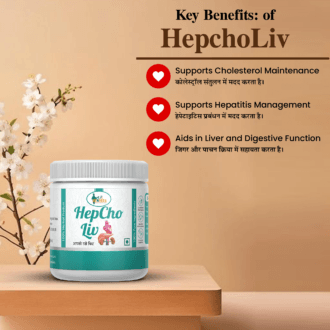
HepCho Liv by Zen Veda is formulated from certified, Uttarakhand-sourced herbs traditionally used to support healthy liver function and digestion, in keeping with this classical approach. Explore our wider range of Ayurvedic wellness products, or learn more on our About Us page.
Want personalised guidance for your liver health routine? Book a free consultation with our Vaidyas.
Frequently asked questions
What does Ayurveda call the liver?
Ayurveda calls the liver Yakrit and considers it a key seat of Rakta dhatu, the tissue responsible for blood formation and quality.
Which dosha is most linked to liver health?
Pitta dosha is most closely linked to liver function, since it governs digestion, metabolism and the body’s transformative processes.
What is Agni and how does it relate to the liver?
Agni is Ayurveda’s concept of digestive and metabolic fire, and the liver is considered one of its main physical seats, central to fat metabolism and detoxification.
What is the most important classical liver herb in Ayurveda?
Guduchi (Tinospora cordifolia) is among the most referenced classical liver herbs, with a growing body of modern research reviewing its hepatoprotective properties.
Does Ayurveda treat liver problems only with herbs?
No, herbs are traditionally used alongside diet, daily routine and digestion support, which Ayurveda considers the real foundation of liver health.
Is Ayurveda’s liver approach backed by classical texts?
Yes, both the Charaka Samhita and Ashtanga Hridayam describe Yakrit, Pitta dosha and Agni in detail as central to liver and metabolic health.
📚 Sources
1. Ranjith, D. et al. “Traditional uses, hepatoprotective potential, and phytopharmacology of Tinospora cordifolia: a narrative review.” Journal of Pharmacy and Pharmacology, 2024. PubMed 38280221
2. Charaka Samhita — classical description of Yakrit, Pitta dosha and Agni in relation to liver and metabolic function.
3. Ashtanga Hridayam — classical Ayurvedic reference for Rakta dhatu and digestive fire balance.
2. Charaka Samhita — classical description of Yakrit, Pitta dosha and Agni in relation to liver and metabolic function.
3. Ashtanga Hridayam — classical Ayurvedic reference for Rakta dhatu and digestive fire balance.
Disclaimer: This article is for educational purposes only and is not a substitute for personalised medical advice. Individual results vary. Please consult a qualified Ayurvedic practitioner or your healthcare provider before starting any new treatment, especially if you are managing a medical condition or taking medication.
★ 6,500+ happy customers
Ready to start your Ayurvedic hair journey?
Our Vaidyas build personalised herbal routines for you. Free consultation, no obligation.
For Free Consultation Contact +919548121325, +919149171737 | International business inquiry: sahil@zenveda.co.in / +919548121325
Recommended Zen Veda products
Author
