

- Your cart is empty Browse Shop
📌 Quick facts:
- Arjuna (Terminalia arjuna), known in Ayurveda as Arjun ki Chaal, is one of the most extensively studied herbs used as ayurvedic medicine for cholesterol control.
- A 2011 study found an ethanolic fraction of Terminalia arjuna bark showed genuine anti-atherogenic activity in hypercholesterolemic rabbits.
- Classical Ayurveda has used Arjuna bark for heart and circulation support for centuries, long before modern lipid panels existed.
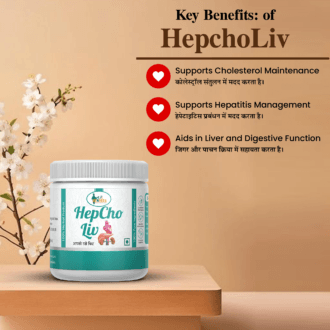
- HepCho Liv is built around Arjun ki Chaal as one of its core cholesterol-supportive herbs.
Among the herbs that come up constantly when researching ayurvedic medicine for cholesterol control, one name appears more consistently than any other: Arjuna, or Arjun ki Chaal. This guide looks specifically at what Arjuna actually is, what real research says about it, and how it works as part of a combined formula like HepCho Liv rather than as a standalone extract.
Understanding one herb in real depth, rather than skimming a long list of ingredient names, genuinely helps when comparing products — it lets you judge a formula on what it actually contains rather than on how confidently it’s marketed.
📋 In this guide
- What is Arjuna, and why is it central to ayurvedic medicine for cholesterol control?
- What does research actually say about Arjuna and cholesterol?
- How has classical Ayurveda traditionally used Arjun ki Chaal?
- Does Arjuna work better alone, or combined with other herbs?
- How much Arjuna do you actually need, and how is it best taken?
- How does HepCho Liv use Arjuna as part of its formula?
- Is Arjuna safe to take alongside other medication?
- Frequently asked questions
What is Arjuna, and why is it central to ayurvedic medicine for cholesterol control?
⚡ Quick answer: Arjuna is the bark of the Terminalia arjuna tree, one of classical Ayurveda’s most respected herbs for heart, circulation and cholesterol-related wellness. It’s a common core ingredient across many Ayurvedic cholesterol formulas, including HepCho Liv, rather than a rare or unusual addition.
Arjuna, botanically Terminalia arjuna, is the dried bark of a large tree native to the Indian subcontinent, and it holds a genuinely long-standing place in classical Ayurvedic texts specifically for heart, circulation and cholesterol-related wellness. Unlike many trend-driven wellness ingredients that appear suddenly and fade quickly, Arjuna’s reputation has built up consistently over centuries of documented use, which is exactly why it appears as a core ingredient across a large share of Ayurvedic cholesterol and heart-wellness formulas on the market today, HepCho Liv included.
What does research actually say about Arjuna and cholesterol?
⚡ Quick answer: A 2011 study published in a peer-reviewed journal found that an ethanolic fraction of Terminalia arjuna bark showed genuine, measurable anti-atherogenic activity in hypercholesterolemic rabbits. This gives real research backing to Arjuna’s traditional heart and cholesterol reputation, beyond folklore alone.
A 2011 study published in Evidence-Based Complementary and Alternative Medicine, examining the anti-atherogenic activity of an ethanolic fraction of Terminalia arjuna bark in hypercholesterolemic rabbits, found genuine, measurable improvements in markers associated with atherosclerosis (Subramaniam et al., 2011). While this particular study was conducted in an animal model rather than in humans directly, it adds real, published scientific weight to Arjuna’s long traditional reputation for heart and cholesterol support, and it’s part of a broader, growing body of research examining Terminalia arjuna specifically for cardiovascular and lipid-related outcomes.
How has classical Ayurveda traditionally used Arjun ki Chaal?
⚡ Quick answer: Classical Ayurvedic texts describe Arjuna bark as a heart tonic, traditionally used to support circulation and cardiac strength long before modern lipid panels existed. It’s typically prepared as a decoction or included in compound formulas rather than used as an isolated extract alone.
Classical Ayurvedic texts, including references within the broader Charaka and Sushruta traditions, describe Arjuna bark specifically as a Hridya herb — one traditionally used to support the heart and circulation — prepared historically as a decoction, or Kwatha, and later incorporated into compound formulas alongside complementary herbs. This traditional framing, focused on the heart and circulatory system broadly rather than one isolated lab value, lines up closely with how modern research on Arjuna tends to be framed too — as a herb supporting cardiovascular and lipid wellness together, not cholesterol in complete isolation.
Does Arjuna work better alone, or combined with other herbs?
⚡ Quick answer: Classical Ayurveda has traditionally used Arjuna within compound formulas rather than as a standalone extract, pairing it with digestive and metabolic herbs like cinnamon or Kachnar for a genuinely broader effect. This combined approach is exactly why most well-regarded formulas today still pair Arjuna with other researched herbs.
While Arjuna has real research behind it individually, classical Ayurvedic formulation practice has rarely used it entirely alone — it’s traditionally paired with digestion-supporting and metabolism-supporting herbs, on the understanding that cholesterol and heart wellness genuinely benefit from more than one angle of support working together. This is a meaningful distinction worth understanding before buying: a single-ingredient Arjuna capsule and a combined formula built around Arjuna alongside cinnamon or Kachnar are simply not the same product, even though both might reasonably be marketed as containing Arjuna.
How much Arjuna do you actually need, and how is it best taken?
⚡ Quick answer: Traditional and modern formulas generally use standardized bark extract taken consistently, twice daily with warm water, rather than as an occasional dose taken only when convenient. Following the specific product’s stated dosage matters considerably more than trying to estimate an amount yourself from general Arjuna research alone.
Because Arjuna dosage in research studies and traditional formulas varies by preparation method — bark powder, standardized extract, or decoction — there isn’t one single universal “correct” amount that applies across every product. What matters in practice is following the specific dosage stated on whichever formula you’re using, taken consistently, generally twice daily with warm water, rather than trying to estimate an amount yourself based on a research paper using a different extraction method entirely.
How does HepCho Liv use Arjuna as part of its formula?
⚡ Quick answer: HepCho Liv uses Arjun ki Chaal as a core ingredient, combined with Kachnar, Peepal and cinnamon, to support liver health and healthy cholesterol maintenance together rather than isolating cholesterol as a single goal. This reflects the classical, combined-herb approach to using Arjuna described above.
HepCho Liv by Zen Veda uses Arjun ki Chaal as one of its core ingredients, deliberately combined with Kachnar, Peepal and Darcheeni (cinnamon) rather than used as a single isolated extract, taken as two tablets morning and evening with warm water. This reflects exactly the traditional, compound-formula approach to using Arjuna that classical Ayurveda has favoured for centuries, supporting liver health and healthy cholesterol maintenance as a connected pair rather than treating cholesterol as a single number to chase in isolation.
Is Arjuna safe to take alongside other medication?
⚡ Quick answer: Arjuna is generally well tolerated as part of a properly formulated Ayurvedic product used at the stated dose, but anyone already on heart or cholesterol medication should genuinely check with a qualified healthcare professional first. Herbs and pharmaceutical medication can interact in ways that are easy to overlook otherwise.
Arjuna, used at the dosage stated in a properly formulated Ayurvedic product, is generally well tolerated by most healthy adults as part of a daily wellness routine. That said, because Arjuna has a genuine, researched effect on heart and circulatory markers, anyone already taking prescribed heart or cholesterol medication should speak with a qualified healthcare professional before adding it to their routine, simply because herbs and pharmaceutical medication can interact in ways that aren’t always obvious from the outside. This is a genuinely sensible precaution to take seriously, rather than a reason to avoid Arjuna altogether.
Ready to try an Arjuna-based formula? Explore HepCho Liv directly from Zen Veda. See our wider range of Ayurvedic wellness products, or read more on our About Us page.
Have questions before you buy? Reach out to our team — we’re happy to help.
Frequently asked questions
What is Arjuna, or Arjun ki Chaal?
It’s the dried bark of the Terminalia arjuna tree, one of classical Ayurveda’s most respected herbs for heart, circulation and cholesterol-related wellness.
Is there real research behind Arjuna for cholesterol?
Yes, a 2011 study found an ethanolic fraction of Terminalia arjuna bark showed genuine anti-atherogenic activity in hypercholesterolemic rabbits.
How has Ayurveda traditionally used Arjuna bark?
As a Hridya, or heart-supporting herb, traditionally prepared as a decoction and later included in compound formulas alongside complementary herbs.
Is Arjuna better used alone or combined with other herbs?
Classical Ayurveda has traditionally combined it with digestion and metabolism-supporting herbs like cinnamon, rather than using it entirely alone.
How should Arjuna be taken for cholesterol support?
Consistently, following the specific product’s stated dosage, generally twice daily with warm water rather than as an occasional dose.
Does HepCho Liv contain Arjuna?
Yes, Arjun ki Chaal is one of HepCho Liv’s core ingredients, combined with Kachnar, Peepal and cinnamon in one daily formula.
📚 Sources
1. Subramaniam, S. et al. “Anti-Atherogenic Activity of Ethanolic Fraction of Terminalia arjuna Bark on Hypercholesterolemic Rabbits.” Evidence-Based Complementary and Alternative Medicine, 2011. PubMed 21785628
2. Charaka Samhita — classical description of Hridya herbs traditionally used for heart and circulation support.
3. Sushruta Samhita — classical Ayurvedic reference on herbal decoctions (Kwatha) and compound formulations.
2. Charaka Samhita — classical description of Hridya herbs traditionally used for heart and circulation support.
3. Sushruta Samhita — classical Ayurvedic reference on herbal decoctions (Kwatha) and compound formulations.
Disclaimer: This article is for educational purposes only and is not a substitute for professional medical advice. HepCho Liv is a wellness supplement and does not treat, cure or prevent any disease. If you have diagnosed high cholesterol or are on medication, please consult a qualified healthcare professional before use.
★ 6,500+ happy customers
Ready to start your Ayurvedic hair journey?
Our Vaidyas build personalised herbal routines for you. Free consultation, no obligation.
For Free Consultation Contact +919548121325, +919149171737 | International business inquiry: sahil@zenveda.co.in / +919548121325
Recommended Zen Veda products
Author
