





- Your cart is empty Browse Shop
📌 Quick facts:
- Fatty liver means excess fat has accumulated in liver cells, beyond what’s considered a healthy amount.
- A 2024 multisociety consensus statement confirms the medical field has moved toward the term MASLD (metabolic dysfunction-associated steatotic liver disease) to better reflect its causes.
- It’s extremely common — affecting a large share of adults globally — and closely tied to metabolic health, not just alcohol use.
- Ayurveda views liver function (Yakrit) as tied to Agni (digestive fire) and metabolic balance.
“Fatty liver” is a term many people hear, often from a routine blood test or scan, without a clear sense of what it actually means or how serious it is. This guide explains what fatty liver is in plain terms, how the medical understanding of it has evolved, and how Ayurveda frames liver health.
Understanding the basics matters because a diagnosis or mention of “fatty liver” can sound alarming without context, when in fact knowing what it actually means makes it far easier to take sensible, proportionate action rather than either panicking or ignoring it entirely. Many people first encounter the term on a lab report summary line, with no accompanying explanation, which leaves plenty of room for unnecessary worry to fill that gap.
📋 In this guide
- What does fatty liver actually mean?
- Why has the medical terminology around fatty liver changed?
- How common is fatty liver, really?
- Does fatty liver always mean serious liver damage?
- What’s the difference between “fatty liver” and “liver disease”?
- How does Ayurveda understand the liver’s role in the body?
- Frequently asked questions
What does fatty liver actually mean?
⚡ Quick answer: Fatty liver means excess fat has built up inside liver cells, beyond the small amount considered normal. A healthy liver contains a little fat, but when it exceeds roughly 5% of the liver’s weight, it’s classified as fatty liver, a condition that can range from mild to more advanced.
In simple terms, fatty liver describes a build-up of fat inside liver cells beyond what’s considered normal. A healthy liver naturally contains a small amount of fat, but when that exceeds roughly 5% of the organ’s total weight, it crosses into what’s medically classified as fatty liver. This can range from a mild, early accumulation to more advanced stages involving inflammation or scarring, which is why the term covers a spectrum rather than a single fixed condition. Two people can both technically have “fatty liver” while being at very different points on that spectrum, which is exactly why the specific stage matters more than the label by itself.
Why has the medical terminology around fatty liver changed?
⚡ Quick answer: A 2024 multisociety consensus statement confirms the field has moved toward “MASLD” (metabolic dysfunction-associated steatotic liver disease) instead of the older “NAFLD” label. This shift better reflects that metabolic health — not just the absence of alcohol — is the defining feature of the condition.
A 2024 multisociety Delphi consensus statement, published in the journal Annals of Hepatology, formally confirms a shift in terminology from the older “NAFLD” (non-alcoholic fatty liver disease) to “MASLD” (metabolic dysfunction-associated steatotic liver disease) (Rinella et al., 2024). This isn’t just a labelling change — it reflects a more accurate understanding that this condition is fundamentally tied to metabolic factors like insulin resistance, weight and blood sugar, rather than being defined mainly by what it isn’t (alcohol-related). Understanding this shift helps make sense of why fatty liver is discussed so often alongside diabetes and heart health rather than as a purely separate, isolated liver issue. It also means the same lifestyle changes that support healthy blood sugar and heart function tend to directly support the liver too, rather than requiring a completely separate approach.
How common is fatty liver, really?
⚡ Quick answer: Very common — fatty liver affects a substantial share of adults worldwide, making it one of the most prevalent liver conditions globally. Its prevalence has risen alongside rates of obesity, type 2 diabetes and sedentary lifestyles, reflecting its close ties to modern metabolic health patterns.
Fatty liver is far more common than many people realise, affecting a substantial proportion of adults globally, with prevalence rising alongside broader trends in obesity, type 2 diabetes and sedentary lifestyles. This widespread prevalence is actually reassuring in one sense: having fatty liver doesn’t mean something has gone uniquely or dramatically wrong — it reflects a pattern shared with a very large number of people navigating similar modern lifestyle pressures, and it’s a pattern that responds well to change. Knowing how common it is can also make it easier to bring up with a doctor without embarrassment, since it’s genuinely one of the most frequently discussed findings in routine check-ups today.
Does fatty liver always mean serious liver damage?
⚡ Quick answer: No. Fatty liver exists on a spectrum, and many people have a mild, uncomplicated form that hasn’t progressed to inflammation or scarring. It’s a signal worth acting on, not an automatic sign of severe, irreversible damage, and early-stage fatty liver often responds well to lifestyle changes.
Being diagnosed with fatty liver doesn’t automatically mean serious, irreversible damage has occurred. The condition exists on a spectrum, and a large proportion of people have a simpler, uncomplicated form that hasn’t progressed to inflammation (steatohepatitis) or scarring (fibrosis). This distinction matters because it changes how the diagnosis should be treated emotionally and practically — as a genuine signal worth acting on through lifestyle change, rather than a frightening, fixed verdict with no room to improve. Many cases of early, uncomplicated fatty liver genuinely improve with consistent changes to diet, activity and weight over a matter of months, not years.
What’s the difference between “fatty liver” and “liver disease”?
⚡ Quick answer: “Fatty liver” describes the fat build-up itself, while “liver disease” more broadly covers a wider range of conditions, including more advanced stages where inflammation or scarring has developed. Fatty liver is best understood as an early point on that broader spectrum, not automatically the same as advanced disease.
These terms are often used interchangeably in casual conversation, but there’s a meaningful distinction. “Fatty liver” specifically refers to fat accumulation within liver cells, while “liver disease” is a broader umbrella covering various conditions, including more advanced stages that involve genuine inflammation, scarring, or impaired function. Fatty liver represents an earlier point on this broader spectrum in most cases, and understanding this distinction helps avoid unnecessary alarm when someone’s initial finding is simple fat accumulation rather than advanced disease. A doctor can clarify exactly where a specific result falls on that spectrum, which is a far more useful conversation than trying to interpret a single unfamiliar term alone, and is well worth the short appointment it usually takes to get that clarity.
How does Ayurveda understand the liver’s role in the body?
⚡ Quick answer: Ayurveda views the liver (Yakrit) as closely tied to Agni (digestive fire) and Pitta dosha, treating it as central to metabolism rather than an isolated organ. Supporting balanced Agni through diet and lifestyle is considered foundational to maintaining liver health over time.
Classical Ayurveda describes the liver, Yakrit, as intimately connected to Agni, the digestive fire, and governed largely by Pitta dosha, the principle associated with metabolism and transformation. Rather than treating the liver as an isolated organ to address separately, Ayurveda frames it as central to the body’s overall metabolic processing — meaning liver health is approached through supporting digestion, balanced eating and avoiding excess heavy or oily food, rather than through liver-specific interventions alone, treating the liver’s wellbeing as a natural byproduct of the whole digestive system working well together.
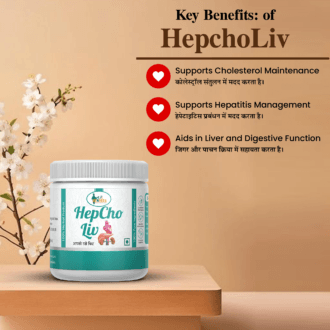
HepCho Liv by Zen Veda is an Ayurvedic formulation designed to support healthy liver function and metabolic balance as part of a sensible daily routine. Explore our wider range of Ayurvedic wellness products, or read more on our About Us page.
Want personalised guidance for your wellness routine? Reach out to our team.
Frequently asked questions
What exactly is fatty liver?
It’s a build-up of excess fat inside liver cells, beyond the small amount considered normal, ranging from mild to more advanced stages.
What does MASLD mean?
It’s the updated medical term for fatty liver, reflecting its close ties to metabolic health factors like insulin resistance and weight.
Is fatty liver a common condition?
Yes, it affects a substantial share of adults globally, closely linked to rising rates of obesity, diabetes and sedentary lifestyles.
Does fatty liver mean serious liver damage?
Not necessarily — many people have a mild, uncomplicated form that hasn’t progressed to inflammation or scarring and responds well to lifestyle changes.
How does Ayurveda view liver health?
Ayurveda ties liver function (Yakrit) to Agni (digestive fire) and Pitta dosha, supporting it through balanced digestion and diet.
📚 Sources
1. Rinella, M. E. et al. “A multisociety Delphi consensus statement on new fatty liver disease nomenclature.” Annals of Hepatology, 2024. PubMed 37364816
2. Charaka Samhita — classical description of Yakrit (liver), Agni and Pitta dosha in metabolic function.
3. Ashtanga Hridayam — classical Ayurvedic reference on digestion and organ balance.
2. Charaka Samhita — classical description of Yakrit (liver), Agni and Pitta dosha in metabolic function.
3. Ashtanga Hridayam — classical Ayurvedic reference on digestion and organ balance.
Disclaimer: This article is for educational purposes only and is not a substitute for professional medical advice, diagnosis or treatment. Individual conditions vary. If you have been diagnosed with fatty liver or have risk factors, please consult a qualified healthcare professional.
★ 6,500+ happy customers
Ready to start your Ayurvedic hair journey?
Our Vaidyas build personalised herbal routines for you. Free consultation, no obligation.
For Free Consultation Contact +919548121325, +919149171737 | International business inquiry: sahil@zenveda.co.in / +919548121325
Recommended Zen Veda products
Author
