





- Your cart is empty Browse Shop
📌 Quick facts:
- Technique matters as much as the oil itself — gentle, circular, upward strokes are the traditional Ayurvedic method for breast self-massage.
- A small amount (roughly a teaspoon per side) warmed slightly before application absorbs better than a large amount applied cold.
- Ayurveda recommends this as part of a daily or near-daily dinacharya (self-care routine), most commonly after a warm bath or shower.
- Consistency over weeks matters more than pressure or quantity — this is a gentle ritual, not a vigorous treatment.
Buying an Ayurvedic breast massage oil is the easy part. Using it correctly — with the right amount, the right technique, and the right frequency — is what actually determines whether you get the nourishing, skin-firming benefit it’s meant to offer. This guide walks through exactly how to use breast massage oil safely and effectively, step by step.
None of this is complicated, but small details — how much oil, which direction to massage, how long to leave it on — genuinely change the results. We’ll cover technique, frequency, timing, precautions, and storage, so you can build a routine that actually works.
📋 In this guide
- What’s the correct way to apply Ayurvedic breast massage oil?
- How much oil should you use each time?
- How often should you massage for best results?
- What’s the best time of day to massage?
- Are there any precautions or people who should avoid it?
- How do you store the oil to keep it fresh?
- Frequently asked questions
What’s the correct way to apply Ayurvedic breast massage oil?
⚡ Quick answer: Warm a small amount of oil between your palms, then use gentle, circular motions moving from the outer chest inward and slightly upward. Avoid pressing hard — Ayurvedic massage on this area is meant to be light and soothing, not deep-tissue or forceful.
Start by warming the oil slightly, either by rubbing a small amount between your palms or standing the bottle in warm (not hot) water for a minute. Apply using flat palms in gentle circular motions, generally working from the outer areas toward the centre and slightly upward — this follows the traditional direction described for abhyanga (Ayurvedic oil massage) on the chest and upper body. Keep the pressure light; this is a nourishing massage, not a deep tissue treatment, and breast tissue is sensitive enough that firm pressure isn’t necessary or advisable.
How much oil should you use each time?
⚡ Quick answer: Roughly half a teaspoon to one teaspoon per side is enough for most people — just enough for your palms to glide smoothly without dragging on the skin. Using more doesn’t improve results; it just wastes product and can feel greasy for longer.
More oil is not better oil. A small amount — enough that your hands move smoothly across the skin without tugging — is all that’s needed. If you notice the oil pooling or taking a long time to absorb, you’ve likely used too much. The goal is a light, even coating that the skin can absorb within several minutes, leaving skin soft rather than visibly oily for hours afterward.
How often should you massage for best results?
⚡ Quick answer: Daily or near-daily application, ideally at a consistent time, gives the most noticeable improvement in skin softness and firmness over 2 to 4 weeks. Occasional or inconsistent use will show far slower, less noticeable results, and may leave you unsure whether the oil is doing anything at all.
Consistency is the single biggest factor separating people who see a real difference from those who don’t. Ayurveda’s approach to daily self-care, dinacharya, is built on the idea that small, repeated actions compound over time — a principle that applies directly here. Massaging once a week will do very little; massaging daily or near-daily, even briefly, builds a cumulative improvement in skin texture and comfort over several weeks.
A simple way to stay consistent is to attach the massage to an existing daily habit rather than treating it as a separate task to remember. Many people find it easiest to link it to their evening routine, right after brushing their teeth or applying a regular body moisturiser, so it becomes automatic rather than something that requires extra willpower each day. Tracking it for the first two weeks, even with a simple note on your phone, can help confirm the habit has genuinely stuck before it becomes second nature.
What’s the best time of day to massage?
⚡ Quick answer: Right after a warm bath or shower is traditionally preferred, when skin pores are naturally more receptive and the skin is already slightly warm. Night time, before bed, is the next best option if a morning routine isn’t practical for you.
Post-bath application is the classical recommendation because warm, slightly damp skin is more receptive to oil absorption than cold, dry skin. If your routine doesn’t allow for that, applying at night before bed works nearly as well — the important thing is picking a time you can realistically stick to every day, since consistency matters more than the exact hour you choose.
Are there any precautions or people who should avoid it?
⚡ Quick answer: Avoid use on broken, irritated, or recently operated-on skin, and discontinue immediately if you notice redness, itching or a rash. Anyone pregnant, breastfeeding, or with a diagnosed breast condition should check with a doctor before starting any new topical product.
This is genuinely important, not just a formality. Any topical product, herbal or otherwise, can cause irritation in a small percentage of users — always patch-test on a small area of skin first and wait 24 hours before regular use. Avoid application over any cuts, active skin conditions, or recent surgical sites. If you are pregnant, breastfeeding, or currently being monitored for a breast health condition, speak with your doctor before adding any new topical product to your routine.
How do you store the oil to keep it fresh?
⚡ Quick answer: Store the bottle tightly capped in a cool, dry place away from direct sunlight, and avoid introducing water into the bottle. Most herbal oils like this stay fresh for several months when stored properly, but always check for any change in smell or texture before use.
Heat, light and moisture are the main enemies of any herbal oil’s shelf life. Keep the cap tightly closed between uses, store it somewhere cool and away from direct sunlight — a bathroom cabinet away from a window works well — and always use clean, dry hands or a dropper rather than dipping wet fingers into the bottle. If the oil’s smell, colour or texture changes noticeably, it’s best to discontinue use and check with the seller. A cool cabinet away from steam and direct heat, rather than a windowsill or shower shelf, is generally the best spot to keep the bottle between uses, since bathroom humidity and steam can shorten the oil’s shelf life faster than most people expect.
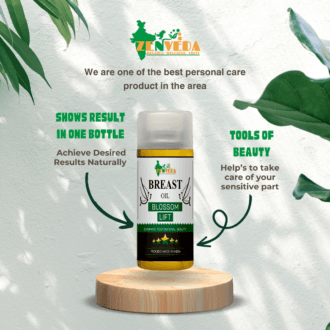
Blossom Lift by Zen Veda is formulated specifically for this kind of gentle, daily external massage — a herbal infusion in a nourishing oil base, free from harsh chemicals, made to be used exactly the way this guide describes. Explore our full range of Ayurvedic wellness products, or learn more about our formulations on the About Us page.
Still unsure what routine suits you best? Reach out to our team for straightforward, honest guidance.
Frequently asked questions
How much breast massage oil should I use per application?
Roughly half a teaspoon to one teaspoon per side is enough — just enough for your palms to glide smoothly across the skin without excess product left behind.
Can I massage with the oil every day?
Yes, daily or near-daily use is the traditional and recommended approach, since consistent, gentle massage over weeks produces noticeably better results than occasional use.
What direction should I massage in?
Gentle circular motions moving from the outer chest inward and slightly upward, following the traditional direction described for Ayurvedic oil massage on the upper body.
Should I massage before or after a shower?
Right after a warm bath or shower is traditionally preferred, since slightly warm, damp skin absorbs the oil more readily than cold, dry skin.
Who should avoid breast massage oil?
Anyone with broken or irritated skin, a recent surgical site, or a diagnosed breast condition should avoid use or consult a doctor first; pregnant or breastfeeding women should also check before starting.
How long does an Ayurvedic breast oil stay fresh once opened?
Most herbal oils remain fresh for several months when stored tightly capped in a cool, dry place away from sunlight and moisture — always check smell and texture before each use.
📚 Sources
1. Danby, S.G. et al. “Effect of olive and sunflower seed oil on the adult skin barrier: implications for neonatal skin care.” Pediatric Dermatology, 2013. PubMed 22995032
2. Charaka Samhita — classical description of abhyanga (daily oil massage) technique and its role in dinacharya (daily self-care routine).
3. Ashtanga Hridayam — classical Ayurvedic reference for timing and method of daily oil massage.
2. Charaka Samhita — classical description of abhyanga (daily oil massage) technique and its role in dinacharya (daily self-care routine).
3. Ashtanga Hridayam — classical Ayurvedic reference for timing and method of daily oil massage.
Disclaimer: This article is for educational purposes only and is not a substitute for personalised medical advice. Individual results vary. Please consult a qualified Ayurvedic practitioner or your healthcare provider before starting any new treatment, especially if you are managing a medical condition or taking medication.
★ 6,500+ happy customers
Ready to start your Ayurvedic hair journey?
Our Vaidyas build personalised herbal routines for you. Free consultation, no obligation.
For Free Consultation Contact +919548121325, +919149171737 | International business inquiry: sahil@zenveda.co.in / +919548121325
Recommended Zen Veda products
Author
