





- Your cart is empty Browse Shop
📌 Quick facts:
- The menstrual cycle is governed in Ayurveda largely by Vata dosha — specifically apana vata, which controls downward flow and timing.
- Irregular, scanty or delayed periods often reflect aggravated Vata from stress, irregular routine, under-eating, over-exercise or too much cold, dry food.
- Modern research links chronic stress to disrupted cycles and ovulation — echoing the Vata connection.
- Ayurveda’s answer is grounding, warming, nourishing routine plus supportive herbs — patiently, over a few cycles.
A period that arrives late, early, unpredictably or barely at all can be quietly unsettling — and often the tests come back “normal”, leaving you without a clear explanation. Ayurveda offers a genuinely useful lens here. It has always understood the menstrual cycle as a rhythmic, flowing event, and it pins that rhythm largely on one dosha: Vata, the principle of movement, timing and flow. When Vata goes out of balance, the cycle very often follows.
This article explains what really drives irregular periods, why Vata is so central, how to recognise a Vata-type cycle, and the diet, lifestyle and herbal support Ayurveda uses to gently restore rhythm. We will also be clear about when irregular periods deserve a doctor’s attention — because Ayurveda works best alongside proper medical care.
📋 In this guide
What causes irregular periods?
⚡ Quick answer: Irregular periods can stem from stress, sudden weight change, over-exercise, poor sleep, thyroid or hormonal conditions like PCOD, and life stages such as adolescence or perimenopause. In Ayurveda, most of these share a common thread — they aggravate Vata, the dosha that governs the cycle’s timing and flow. Addressing that root often steadies the rhythm.
From a modern standpoint, irregular cycles have many possible triggers: psychological stress, rapid weight loss or gain, intense exercise, disrupted sleep, thyroid imbalance, and hormonal conditions such as PCOD, as well as natural transitions like the first years of menstruation and the approach of menopause. What is striking is that Ayurveda would recognise almost all of these as Vata-aggravating factors. Stress, irregularity, under-nourishment, excessive movement and cold, dry, light living all disturb Vata — and because Vata governs the timing and downward flow of menstruation, that disturbance shows up as an erratic cycle. This is why Ayurvedic care looks past the calendar to the lifestyle beneath it.
How does Vata dosha affect the menstrual cycle?
⚡ Quick answer: Ayurveda assigns the menstrual cycle mainly to apana vata, the sub-dosha controlling downward movement in the pelvis. Healthy apana vata means timely, smooth flow; aggravated Vata means irregular timing, scanty or painful flow, and cramping. Since Vata is dry, cold, light and mobile, calming it with warmth, grounding and nourishment is central to restoring a regular cycle.
Within Ayurveda’s model, the specific force behind menstruation is apana vata — the downward-moving sub-type of Vata seated in the pelvis, responsible for the healthy downward flow of menstruation, elimination and childbirth. When apana vata is balanced, periods come on time and flow smoothly; when Vata is aggravated, its qualities — dry, cold, light, mobile and erratic — express as unpredictable timing, scanty or delayed flow, and often cramping pain. Because Vata is the “leader” of the doshas and the first to be disturbed by modern life, menstrual irregularity is frequently one of the earliest signs the body flags. The therapeutic logic follows directly: bring warmth, steadiness, oiliness and nourishment to counter Vata’s dry, cold, unstable nature, and the cycle tends to settle.
What are the signs your periods are a Vata imbalance?
⚡ Quick answer: Typical Vata-type signs include an unpredictable or delayed cycle, scanty or dark, dry flow, cramping and spasm-like pain, bloating, anxiety, disturbed sleep and cold hands and feet around the period. If your flow is scanty and erratic with a lot of tension and dryness, Vata is usually the dosha to calm first.
| Vata-type period signs | What it suggests |
|---|---|
| Irregular, delayed or skipped cycle | Disturbed apana vata timing |
| Scanty, dark or dry flow | Vata dryness affecting artava |
| Cramping, spasm-like pain, bloating | Vata’s cold, mobile, constricting quality |
| Anxiety, poor sleep, cold extremities | Systemic Vata aggravation |
Recognising a Vata pattern helps you target support accurately. The hallmark is irregularity itself — a cycle that will not settle into a predictable rhythm — usually paired with a scanty, dark or dry flow rather than a heavy one. Physically, Vata tends to bring cramping, spasm-like or shifting pain, bloating and gas around the period, and cold hands and feet. On the mental side, its mobile, light quality often shows as pre-period anxiety, restlessness or disturbed sleep. (By contrast, heavy, hot, inflamed periods point more to Pitta, and sluggish, heavy, mucus-laden ones to Kapha.) When the picture is dry, erratic and tense, calming Vata is the first and most rewarding step.
What Ayurvedic remedies help regulate periods?
⚡ Quick answer: Ayurveda uses warming, grounding, nourishing measures — regular oil massage (abhyanga), warm nourishing food, and herbs traditionally used for menstrual health such as Shatapushpa (dill), Shatavari, Ashoka and ginger. A clinical study found Shatapushpa powder helped in Artava kshaya (scanty, irregular menstruation). Herbs work best alongside a Vata-calming routine, over several cycles.
Ayurvedic support for irregular periods combines lifestyle grounding with specific herbs. Classical practice favours warmth and nourishment: daily self-massage with warm oil (abhyanga) to pacify Vata, warm and unctuous food, and herbs traditionally used for artava (menstrual) health — Shatapushpa (dill seed), Shatavari, Ashoka and warming ginger among them. There is even direct clinical support: a study published in Ayu (2010) by Ghose and colleagues evaluated Shatapushpa (Anethum sowa) powder in the management of Artava kshaya — scanty, irregular menstruation — and reported clinical benefit. Modern research independently confirms the stress link Ayurveda emphasises: reviews describe how chronic psychological stress disrupts the menstrual cycle and ovulation. As always, these herbal measures work gradually and are best used within a Vata-calming routine and, where periods are persistently absent or very abnormal, alongside a doctor’s assessment. Read the Shatapushpa study on PubMed (ID 22048537).
What diet and lifestyle steady the cycle?
⚡ Quick answer: Eat warm, cooked, slightly oily, nourishing meals at regular times; avoid skipping meals, crash diets and too much cold, raw or dry food. Keep a steady daily rhythm, sleep well, and swap intense over-exercise for grounding movement like walking or gentle yoga. Manage stress with breathwork. Regularity in life gently encourages regularity in the cycle.
Because Vata thrives on irregularity, the single most powerful remedy is a steadier life. Eat warm, freshly cooked, slightly oily and nourishing meals at consistent times, and be wary of the modern habits that aggravate Vata — skipping meals, crash dieting, and living on cold, raw, dry or over-light food. Protect your sleep and keep a regular daily rhythm (dinacharya), since predictable timing is deeply calming to Vata. Trade punishing, high-intensity exercise for grounding movement such as walking, restorative yoga and gentle strength work, and make daily stress-care — slow breathing, meditation, unhurried time — non-negotiable, given how directly stress disturbs the cycle. These changes are simple, but for Vata-type irregularity they are often the difference-maker over two or three cycles.
How does Zen Veda support menstrual health?
⚡ Quick answer: Zen Veda’s Rooh E Niswa is a female health support formula made from certified, Uttarakhand-sourced herbs, designed to complement a Vata-calming diet and routine rather than replace medical care. Combined with warmth, nourishment and steady living, it offers gentle support for women’s menstrual wellbeing — with a free Vaidya consultation to tailor it to your pattern.
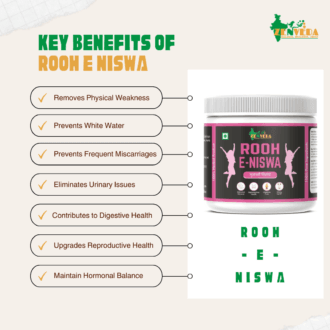
Zen Veda’s women’s care is built around this gentle, grounding philosophy. Rooh E Niswa is a female health support formula made from certified, Uttarakhand-sourced herbs, intended to complement — not replace — a Vata-pacifying diet, oil massage and a steady daily routine. We are careful to keep expectations realistic: Ayurvedic herbs support the body’s own rhythm, and persistent or severe menstrual problems always deserve medical evaluation too. Explore the wider Zen Veda women’s range to find what suits you.
Want help identifying your dosha pattern and building a plan? You can book a free consultation with our Vaidyas for gentle, personalised guidance.
Frequently asked questions
What is considered an irregular period?
Cycles that are consistently shorter than about 21 days or longer than 35 days, that vary widely month to month, or that are frequently skipped are generally considered irregular. Occasional variation is normal; a persistent pattern is worth understanding and, if needed, checking with a doctor.
Can stress cause irregular periods?
Yes. Chronic psychological stress can disrupt the hormonal signals that drive ovulation and menstruation, and research links stress to cycle irregularity. Ayurveda frames this as stress aggravating Vata, which is why calming, grounding stress-care is so central to restoring rhythm.
Which Ayurvedic herbs help periods?
Herbs traditionally used for menstrual health include Shatapushpa (dill), Shatavari, Ashoka and warming ginger, usually within a Vata-calming routine. They are best taken as part of a balanced formula and consistently over several cycles rather than as a one-off remedy.
How long does it take to regulate periods with Ayurveda?
Because the cycle itself is monthly, meaningful change usually shows over two to four cycles of consistent diet, lifestyle and herbal support. Ayurveda works with the body’s rhythm patiently rather than forcing a rapid result.
When should I see a doctor about irregular periods?
See a doctor if periods stop for several months, become very heavy or painful, occur very frequently, or are accompanied by other symptoms. Irregular periods can signal conditions like PCOD or thyroid issues, so medical evaluation alongside Ayurvedic support is the safest approach.
📚 Sources
1. Ghose A, Dashputra AV, et al. “Clinical efficacy of Shatapushpa (Anethum sowa Kurz.) powder in the management of Artava kshaya (oligomenorrhea).” Ayu, 2010. PubMed 22048537
2. Saadedine M, et al. “The silent pandemic of stress: impact on menstrual cycle and ovulation.” Stress, 2025. PubMed 39862134
3. Charaka Samhita & Ashtanga Hridayam — classical Ayurvedic references for apana vata, artava and menstrual health.
2. Saadedine M, et al. “The silent pandemic of stress: impact on menstrual cycle and ovulation.” Stress, 2025. PubMed 39862134
3. Charaka Samhita & Ashtanga Hridayam — classical Ayurvedic references for apana vata, artava and menstrual health.
★ 6,500+ happy customers
Ready to start your Ayurvedic hair journey?
Our Vaidyas build personalised herbal routines for you. Free consultation, no obligation.
For Free Consultation Contact +919548121325, +919149171737 | International business inquiry: sahil@zenveda.co.in / +919548121325
Recommended Zen Veda products
Author
