






- Your cart is empty Browse Shop
📌 Quick facts:
- Women have some distinct nutritional needs, and certain nutrients are especially important to watch — iron, calcium, vitamin D, folate and vitamin B12.
- Iron deficiency is particularly common in women of reproductive age, largely due to monthly blood loss.
- A 2022 review highlighted the importance of iron for women’s health and how iron deficiency and anaemia commonly affect them.
- Ayurveda emphasises nourishing, easily digestible foods to build Rasa and Rakta dhatu (nourishing fluid and blood), supporting overall feminine wellness.
Good nutrition matters for everyone, but women have some specific needs shaped by menstruation, pregnancy, breastfeeding and menopause. Certain nutrients deserve particular attention because deficiencies in them are both common and consequential for energy, bone health and overall wellbeing. This guide walks through five nutrients especially important for women, why they matter, what the research highlights, and how Ayurveda traditionally approaches overall nourishment for women.
This isn’t about chasing supplements — it’s about knowing which nutrients to prioritise through food, and when a confirmed, properly tested shortfall might genuinely need more focused attention.
📋 In this guide
Why is iron so important for women?
⚡ Quick answer: Iron is critical because women of reproductive age lose iron through monthly menstruation, making iron deficiency and anaemia notably common. Iron carries oxygen in the blood, so a shortfall causes fatigue, weakness and low energy — some of the most frequently overlooked reasons women feel persistently tired.
Iron tops the list for good reason. A 2022 review published in Fertility and Sterility examined iron metabolism and iron deficiency anaemia in women, highlighting how common these are, largely due to iron lost through menstruation (Kumar et al., 2022). Iron is essential for carrying oxygen in the blood, so when it runs low, the result is fatigue, weakness, breathlessness and low energy. Because these symptoms are easy to attribute to a busy life, iron deficiency is one of the most frequently missed explanations for why many women feel persistently drained. The good news is that it’s also one of the most straightforward to identify and address: a simple blood test can confirm it, and once a genuine deficiency is corrected under proper guidance, the improvement in energy can be striking. This is exactly why persistent, unexplained tiredness in women is worth investigating rather than simply pushing through.
Why do women need enough calcium?
⚡ Quick answer: Calcium is vital for bone strength, and women are at higher risk of bone density loss, particularly after menopause when hormonal changes accelerate it. Getting enough calcium throughout life helps build and maintain strong bones, reducing the risk of osteoporosis and fractures later on.
Calcium is essential for building and maintaining strong bones, and this matters especially for women, who are at higher risk of losing bone density with age — a risk that accelerates after menopause as protective hormone levels fall. Getting adequate calcium consistently throughout life, from dairy, leafy greens, and other sources, helps build a stronger bone foundation and slow later loss. This is very much a long-game nutrient: what you take in over the years shapes bone health decades down the line, making early and consistent intake genuinely worthwhile. It’s a nutrient that’s easy to neglect precisely because the consequences of falling short don’t show up for years — but that delay is exactly why building the habit early, well before menopause, pays off so much later in life.
What role does vitamin D play?
⚡ Quick answer: Vitamin D helps the body absorb calcium and supports bone, immune and overall health, yet deficiency is very common — including in sunny countries — due to limited sun exposure and other factors. Because it works hand in hand with calcium, adequate vitamin D is essential for getting the full benefit of calcium intake.
Vitamin D works closely alongside calcium — it’s needed for the body to absorb calcium properly, so the two are effectively a team. Beyond bone health, vitamin D supports immune function and overall wellbeing. Despite its importance, deficiency is remarkably widespread, even in sunny regions, because of limited direct sun exposure, indoor lifestyles, clothing and other factors. This is why vitamin D is one nutrient where testing and, if needed, correcting a genuine deficiency can be particularly worthwhile, since you can’t reliably judge your levels from how you feel alone.
Why are folate and B12 important, especially in the reproductive years?
⚡ Quick answer: Folate is crucial before and during pregnancy for healthy foetal development, and vitamin B12 supports energy, nerve function and healthy blood. Both are important across the reproductive years, and B12 deserves particular attention for women following vegetarian or vegan diets, where intake can be lower.
Folate (vitamin B9) is especially important before and during pregnancy, where adequate levels support healthy early foetal development — which is why it’s widely recommended for women planning to conceive. Vitamin B12 supports energy, healthy nerves and red blood cell formation. B12 warrants particular attention for women following vegetarian or vegan diets, since it’s found mainly in animal foods, making shortfalls more likely without careful attention or appropriate supplementation. Together, these B vitamins support energy and wellbeing throughout the reproductive years and beyond.
How does Ayurveda approach nourishment for women?
⚡ Quick answer: Ayurveda emphasises nourishing, easily digestible foods to build Rasa dhatu (the nourishing fluid) and Rakta dhatu (blood), which underpin strength, vitality and healthy complexion. Rather than isolating single nutrients, it focuses on strong digestion so the body can properly absorb and use nourishment.
Ayurveda approaches women’s nutrition through the lens of building healthy tissues — particularly Rasa dhatu, the nourishing fluid formed first from digestion, and Rakta dhatu, the blood tissue, both of which underpin strength, vitality and a healthy complexion. Rather than isolating individual nutrients, the classical emphasis is on nourishing, easily digestible foods and, crucially, strong Agni (digestive fire) so the body can actually absorb and use what it takes in. This complements the modern nutrient-focused view: it’s not only what you happen to eat, but how well you actually digest and absorb it.
How can women make sure they get these nutrients?
⚡ Quick answer: Eat a varied, balanced diet rich in whole foods, get iron and calcium from a mix of sources, ensure some sun exposure or tested vitamin D, and pay attention to B12 on plant-based diets. Test and correct genuine deficiencies rather than guessing, and support digestion so nutrients are well absorbed.
The most reliable approach is a varied, balanced diet built on whole foods, drawing iron and calcium from a range of sources, alongside some sensible sun exposure and attention to B12 if you eat little or no animal food. Rather than guessing or self-supplementing broadly, it’s more useful to have levels tested if you suspect a deficiency — correcting a genuine shortfall is meaningful, while taking nutrients you’re not lacking achieves little. Supporting healthy digestion helps the body absorb these nutrients, and traditional wellness tonics can complement a nourishing diet.
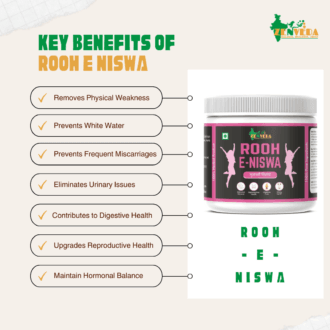
Rooh E Niswa by Zen Veda is a women’s wellness tonic of classical herbs traditionally used to support feminine health, strength and everyday vitality. Explore our wider range of Ayurvedic wellness products, or read more on our About Us page.
Want personalised guidance for your nutrition and wellness? Book a free consultation with our Vaidyas.
Frequently asked questions
Which nutrients are most important for women?
Iron, calcium, vitamin D, folate and vitamin B12 are especially important, since deficiencies in them are both common in women and consequential for energy and bone health.
Why is iron deficiency common in women?
Women of reproductive age lose iron through monthly menstruation, which makes iron deficiency and anaemia notably common and a frequent, overlooked cause of persistent fatigue.
Do women need more calcium?
Women are at higher risk of bone density loss, especially after menopause, so adequate calcium throughout life is important for maintaining strong bones and reducing fracture risk.
Why is vitamin D deficiency so common?
Limited direct sun exposure, indoor lifestyles and other factors make vitamin D deficiency widespread even in sunny countries, which is why testing can be worthwhile.
Should vegetarian women worry about B12?
Yes, vitamin B12 is found mainly in animal foods, so women on vegetarian or vegan diets should pay particular attention to intake or appropriate supplementation.
How does Ayurveda view women’s nutrition?
Ayurveda emphasises nourishing, easily digestible foods and strong digestion to build Rasa and Rakta dhatu, supporting strength, vitality and healthy complexion.
📚 Sources
1. Kumar, A. et al. “Iron metabolism and iron deficiency anemia in women.” Fertility and Sterility, 2022. PubMed 36075747
2. Charaka Samhita — classical description of Rasa and Rakta dhatu and nourishment.
3. Ashtanga Hridayam — classical Ayurvedic reference for diet, digestion and women’s wellness.
2. Charaka Samhita — classical description of Rasa and Rakta dhatu and nourishment.
3. Ashtanga Hridayam — classical Ayurvedic reference for diet, digestion and women’s wellness.
Disclaimer: This article is for educational purposes only and is not a substitute for personalised medical advice. Individual results vary. Please consult a qualified Ayurvedic practitioner or your healthcare provider before starting any new treatment or supplement, especially if you are pregnant, breastfeeding, or managing a medical condition.
★ 6,500+ happy customers
Ready to start your Ayurvedic hair journey?
Our Vaidyas build personalised herbal routines for you. Free consultation, no obligation.
For Free Consultation Contact +919548121325, +919149171737 | International business inquiry: sahil@zenveda.co.in / +919548121325
Recommended Zen Veda products
Author
